Showing posts with label stories. Show all posts

Sunday, March 08, 2009

storytelling (1): obama gets fired up


Shawn played a similar video to this at a conference I was at in Melbourne about a month ago. Barack Obama tells a story. The story he tells is very well known in the US but comparatively unseen here in Australia. He used it many times when he was campaigning for the presidency. I defy people to watch it and be untouched. This time he actually had Edith Childs there - but many times it was just him telling the story.

I think it's great example of the use of narrative in public speaking - so I'm just going to make a few notes about it:
  • It's a story based on true events, not a fable or a fiction - altho there is some dispute by other participants as to details.
  • It's told in the first person, Obama (our narrator) is a character in the story.
  • It is slyly self-deprecating. He is tricked into doing something. He is crabby when he comes to the meeting. In other words, the narrator is a normal person.
  • It is about an everyday event. It is not about an epic moment in American history - it is about something quite commonplace - a small act by someone that has a big effect on him. It is a situation that many of the audience members can relate to.
  • The story is contained in time & space. It is not his life story, it is not the history of American civil rights. It is focused.
  • The little details matter - for me it was the reference to Edith Childs' hats. Little details can convince us of the plausibility of a story.
  • It ends with a call to action that is consonant with the story itself.
  • It's also quite a long story (8 mins approx) and it takes place near the end of Obama's speech after he's built up some rapport with the audience.
  • Obama has obviously spent some time in Church. His delivery is reminiscent of a pentecostal preacher.
  • What do you see & hear? What have I missed?
Now one of the worst things you could do would be to think: "That kind of story for worked for Obama in that situation, I do the same thing in my next quarterly results presentation!!!" You & I are not Barack Obama.

But reflect on what touched you in the story. Where were you gripped? Where did it meander? Why?

Also there are other versions of Obama telling this story on the campaign trail - and each is a little different. If you're really keen, try finding those too and have a look.

Wednesday, March 04, 2009

story challenge: rip kungler responds

Rip Kungler responded to my challenge to his honour on the CSTC list regarding the story competition with this digital poem.

I love Rip's work*: Large Toys Make Indulgent Baggage


*The mix of violence, decadence and innocence in Rip's images reminds of that time in Bangkok when I was kidnapped by an under-age tuk-tuk driver who mistook me for George Harrison's nephew. I was in town trying to pitch my edgy "reimagining" of "The Waltons" to a Thai national broadcaster. We were going to play up the hillbilly angle as I recall but not to Deliverance levels obviously, this had to be a family show. They were "onboard" (to use the industry jargon) if we could set it in a little village not far from Chang Rai. They wanted glamour. And monks, lots & lots of monks. This proved to be a sticking point as we had a provisional deal with Matt Le Blanc to play Pa Walton. It is a little-known fact that MLB (as he is known in the industry) has (due to his Irish Catholic ancestry) a morbid fear of the colour orange. He also suffered from aloplecia as a child and finds it traumatic to work with the bald. Negotiations broke down during a teleconference when MLB's agent suggested that the monk's robes should be dyed green & that they be provided with matching wigs. Apparently the Land of Smiles is not yet ready for punk monks. The attempted kidnapping was the last straw. My left knee still aches on humid summer nights and the enraged face of my would-be kidnapper appears before my mind's eye at every ominous putt-putt of a 2-stroke engine.

People tell me that kind of thing happens quite a lot.

Sunday, March 01, 2009

story challenge - show me what cha got...

Here is a challenge. I am looking for people to write some stories for me. Why I am doing this is described below (as is the how)*. There will be a prize - I don't know what the prize is yet. That will become clear when the entries come in. The deadline is March 31st 2009.

Rules
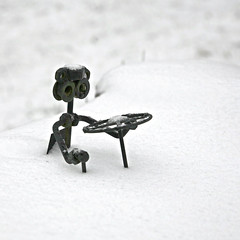
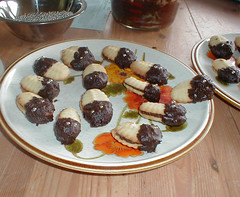
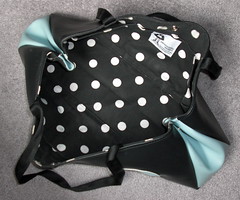
  • Your story should be inspired by the 5 images represented below.
  • It should be less than 500 words (or 5 mins if you choose to use some audio format).
The stories will be judged by Victoria Ward. Jye Smith has already volunteered to participate. Who will take on the mighty JS???

Stories can be posted on a blog as text, audio or video or sent to me.

And now for the 5 images:


Source: crazytales562


Source: Southernpixel


Source: Potato Benevolence


Source: marymactavish


Source: Aine D

Avanti!

*I had been trying to set a Skype podcast with Victoria for the last few months. It wasn't working for either of us so we have taken to setting story-based challenges for each other in lieu of conversation. I was originally going to ask her to write the story but I thought it would be more fun if some of you did it & then got her to respond.

The method I chose for image selection was to ask 5 random people for a word. They were:
James Dellow: implications
Luke Naismith: help
Marcus Brown: lavatory
Ron Donaldson: trilobite
Nancy White: persnickity

Then I put the keywords into Flickr. Ta Da! Many thanks to the above 5 for their input!

Monday, February 16, 2009

do brands have stories?

A few months ago, Shawn wrote about brand stories and how he thinks the word "story" is being misused. I agree with him. In fact, I don't think that you can have a "brand story" but brands absolutely have stories around them.

Let's say that a story contains (i) character(s), (ii) location(s) and (iii) events that befall the characters. A character doesn't have to be a human being but we tend to prefer stories with characters that are. If the character isn't a human (e.g. a dog, a car) then we anthropomorphise them. We give them emotions and moods. We give them reason. Above all, we give them agency. They choose to do stuff. Otherwise things just happen to characters in a story. And we find that unsatisfying. Someone tells us an anecdote about an event (e.g. missing the bus, winning a million dollars) and we often respond: "So what did you do?" That combination of event and (human) response is what makes stories compelling.

Now I'm going to use wikipedia's definition of a brand and today it is this: A brand is a collection of symbols, experiences and associations connected with a product, a service, a person or any other artifact or entity. Brands do not have agency. They cannot choose to do stuff. That makes brands a prop or a piece of the stage scenery. Advertising has traditionally gotten around this by anthropomorphising a brand - giving it a face. Michelin Man, the Jolly Green Giant, etc. And in an age of broadcast media, this worked pretty well (and will continue to work sometimes).

Consumers and employees do have agency. They make interesting characters in stories. And they tell each other stories. In fact, the stories they tell each other are a big part of what makes up a brand. Stories are as important as data. And ideally you combine the two to achieve understanding. And yet many people seem comfortable with either one or the other - rather than both. This is missed opportunity.

The Nokia example embedded in Shawn's post is an interesting one because it tries to tell a very specific story that positions humanity as the protagonist ("we") in an epic tale with Nokia product as the key prop. The comments indicate that not everyone agrees with that story.

There's a few more points here:
  • All this social software stuff can make these stories more visible. The stories have always been there, but they've been hidden & isolated. Antony van Leeuwenhoek's work with the microscope allowed us to see things that had previously been invisible. We've built ourselves a whole bunch of story visualisers and accelerators.
  • There is sometimes an assumption that all stories have to be epic (like the Nokia example) or that stories need to follow a structure like the Hero's Journey of Joseph Campbell. But they don't. Most of the stories we tell each other aren't epic (as Yiannis Gabriel noted, they are mostly quite banal). Attempting to force the everyday into the epic can be silly.
  • There is no one story here. We often believe that if we find the one story then everything else falls into place and yet it rarely does. Salman Rushdie wrote a book called Haroun and the Sea of Stories. I've not read it but I love the image in the title. Stories as a sea that surround us and that we inhabit like fish. A sea that we cannot live without and yet rarely recognise.

other people's stories

I'm currently putting together a whole bunch of stuff on stories and I came across this quote from Steve Denning that I think is very important:
We usually spend a great deal of time thinking about what story we are going to tell. But the hard part of communication is often figuring out what story the audience are currently living. (The Secret Language of Leadership, p. 89)
Official communications often assume that the recipients are blank slates, waiting eagerly to receive what we have to say. A more sophisticated view says that our audience is busy and we must craft compelling stories that grab their attention. However for us to know whether a story is "compelling" or not, we have to know what stories our audience are already telling each other.

We may then choose to tell them something that aligns with what they tell each other already (which is safe but runs the risk of being boring) or present them with something different (which will stand out but always runs the risk of rejection).

Wednesday, January 14, 2009

brands: long tails, complex systems, stories, communities

Sean offers a link to this paper by Mohammed Iqbal. It's fascinating reading because it provides a grounding for a fancy that I've been toying with for a while now: brands as complex systems.

The Long Tail of Meaning

MI's paper talks about a power law distribution of brand propositions associated with a brand. You might even call these brand propositions (with their rational and emotional aspects, their blind cravings for meaning, their roots in lived experience) by another name: "stories". Trad advertising focuses on identifying what the big stories around a brand are. May be one, may be two, a handful at most. These stories can then be blast-broadcasted out via TV, print, even a viral widget for Facebook. However these stories are simply the biggest, loudest and most palatable associated with a brand. They aren't all the stories out there.

Narrative Ecosystems

One thing the long tail model doesn't make very clear is that entities you find in the distribution may not be isolated from each other. Just as a curve in sand may be the mark left by a snake, the long tail itself is the mark made on a distribution of entities (books, songs, brand propositions, dreams) by human choice. If you've ever worked with stories, you'll realise that they exist in an ecosystem - the long tale tail chatters to itself uncontrollably. There may be a single story that someone wants to communicate perfectly to their consumers, employees, citizens or subjects; but once it has been released into the wild it rarely stays unchanged. Instead it interacts with all the related stories that are being told. You don't own your brand. You never did but that comforting deceit is becoming harder and harder to maintain. You can't control the story ecosystem - you can influence it, engage with it, add to it but you can't control it.

Joining the Swarm: Communities

Trad advertising (TVCs, print) still works reasonably well for the head of the tail or the simple/complicated domains. It's not going way but as the rest of the tail and the complexity that forms it becomes more visible, we need other ways of dealing with it. Which is where those pesky community things come in. The stories/meaning/brand propositions become more diffuse and far more messy. You get the whole distribution around you, not the edited 30-second highlights. The leadership that's required here is a little different from yer standard issue.

The gift of the internet has been to surface human behaviour as much as it has been to change it. Can we handle that?

Wednesday, September 03, 2008

the whole truth and

So I was thinking about the relationship between fact & fiction in relation to storytelling and some observations came to mind.

1. Fact & fiction are agreements. A story both teller and listener believe to be true could be labelled "fact" and one both agree is untrue could be "fiction". However those are not the only possibilities. A story the listener believes to be true but not believed to be so by the teller would probably be labelled a "lie" by a 3rd party. And the reverse might be labelled a "error" (or a delusion at worst). 2. In most social situations there is no 3rd party umpire of truth & falsity. And agreement on "fact" and "fiction" can be murky esp. when talking about interpretations and motivations. We end up negotiating a lot of this stuff.

3. The belief of a listener or teller in the story is not always constant. As a teller I might distort events for any number of reasons both innocuous (e.g. compressing events to make the story easier to follow) or self-serving (to influence the listener). As listener I constantly revise my belief of the story - esp. if I don't know the teller well or doubt their reliability.

I'd like to do an experiment where a story is told over the phone with teller and listener being able to control a slider with "totally true" at one end and "totally false" at the other. The result would be a pattern drawn on the above matrix (with a time component - you might show that with a gradual change in colour from start to end).

I wonder what the patterns would look like?

Tuesday, July 01, 2008

podcast - madelyn blair & shawn callahan on storywork

I had the pleasure of discussing storywork with Madelyn Blair & Shawn Callahan this morning. Madelyn & Shawn set up the Ning Worldwide Story Work group and Madelyn is also involved with the Golden Fleece group. Enjoy!

Download the mp3.

Show Notes:
00:00 - Introductions: Madelyn & Shawn's first introduction to storywork.
04:00 - Stories that stick in your mind: Madelyn's story of the Swedish ambassador, the mosque & the stone.
06:00 - Shawn distinguishes between storylistening & storytelling.
08:30 - "Storytelling" as a bit overwhelming vs things that you do everyday.
11:15 - The use of objects in storytelling - Madelyn applies this to mission statements.
13:00 - The importance of context & duckus duckus.
16:00 - Getting different groups to talk.
18:10 - Scientific papers as mystery stories.

Wednesday, April 09, 2008

mistakes & stories

Two Ning groups that you should all be looking at:
  • The Mistake Bank: The Mistake Bank is a repository for "war stories," or brief narratives of mistakes that people would like to share. Please contribute videos or blog posts recounting your mistakes that you think others could learn from.
  • Worldwide Story Work: If you care about story work in organisations please come and join us.
Thanks: Shawn

N.B. Ning doesn't seem to be very good at allowing you to merge accounts created with different email addresses. In fact, it's really bad at it.

Sunday, August 26, 2007

A story from Anecdote

Shawn Callahan offers up a slice of Anecdote's history via YouTube. Shawn's conversational style and wry, frank delivery make this a bit of a must-listen if you're at all interested in narrative-based management techniques.

Friday, August 24, 2007

Tell me a story about creativity

So the comments to the previous brainstorming post have prompted me to reframe this a bit. What I'd really value from the readers of this blog:
  1. Tell me about a group creativity tool you have used (either as a participant or a facilitator) to generate ideas and that you think was successful. Then tell me why you think it worked in that situation. Just has to 2-3 sentences but I'd really appreciate it.
  2. A group situation where you ended up generating lots of ideas (regardless of whether you used a tool or not). Why do you think the group was creative? Now it might simply be that everyone was a gosh darn genius but what else made it work? Again, I'd really appreciate it.
  3. A situation where group creativity didn't happen. And why you think it didn't happen.
Over to you. Feel free to contribute anonymously and to ask your friends also...

Thursday, July 26, 2007

Narrative

I had the great pleasure of attending a workshop run by the Anecdote crew yesterday with a few other people. I first met Shawn back when he was in the IBM Cynefin Centre and I was impressed by the extent to which they had simplified and refined many of the ideas and added from other sources - such as Most Significant Change.

Key takeaway: narrative management is all about managing with stories rather than the management of stories. You cannot control stories but you can use them to gain a rich-picture understanding of your environment.

One thought: Lauchlan discusses an HBR article on innovation. The overall framework of the authors is useful as a diagnostic - and presumably narrative techniques could be applied to this. Anecdotes around successes, failures & managerial attitudes could be matched to 6 categories: If you have mainly positive stories around a particular area then good! If you have mainly negative stories then something needs urgent attention. If you have few stories then you have an opportunity to create a capability you don't currently have...