"If only we could get the right information to the right people in the right palce at the right time"
How many times have you heard someone say that? And it's true. It would be good if we could. However, this is a question that needs to be answered backwards. If you try to answer it forwards you will come unstuck.
The traditional approach to start with the "right information" piece. We collect information. Lots of it. Then we look at who are the "right people" - who are our target audiences to bombard with this stuff? If we are smart, we ask them if we have got the right information. And generally they say "Huh, yeah, I think so. I'm busy with something else right now". And then we set about building the "right place" - a database with a taxonomy & probably mobile access, etc. Generally,we get half way through doing this and then the money runs out. Or we finish it & no one uses it.
We never get as far as the "right time" but this is really crucial question. Remember the answer that the users gave you 6 months ago? That - like so much in life - was all about timing. The critical question to ask is: "How predictable are the information needs of this user group?" And what that really boils down to is: "How predictable are people's jobs?"
If they are very predictable then everything is easy. You can simply push information to users when they need it. However a characteristic of most knowledge workers' jobs (and I include knowledge workers in factories as much as in offices) is that they are highly unpredictable. The order in which tasks occur may vary. Methods provide a useful guide for the intelligent / experienced but not a repeatable process. So you are dependent on them pulling the information they need at the point that they need it. That assumes that they know your system sufficiently well to use it, that they trust what is in there and that your system is usable for them. Those are big assumptions. Esp. if they hardly ever use it because it sits outside their normal working activities.
So here are two hypotheses:
1. Push approaches to information provision can work well when they are linked to predictable events.
2. You need to work on pull approaches for unpredictable events. And pull approaches, by their very nature, must be user-driven.
KM strategies started off as document-centric (& some still are). They have become people-centric (CoPs, PKM). Do they also need to become event-centric?
I feel a 2 x 2 matrix coming on that plots events by frequency vs. impact. You might identify events using narrative techniques (such as future backwards), incident logs, process maps or participant observation. You would then identify events that are handled successfully vs. those that are not. There is much to learn by studying both...
Tuesday, May 01, 2007


Video Conference with the Dalai Lama
Carol Kinsey posts about video conferencing and its relationship to empathy.
We all appreciate the importance of visuals. Most people reading this blog will have watched TV & been to the cinema. Which makes me wonder a bit about video conferencing.
So mirror neurons are important. And yet people are still a**holes to each other F2F. Isn't that evolutionarily impossible?
Interestingly F2F is not the most reliable medium in terms of honesty. That position belongs to email. F2F ranks with IM and the phone comes last. Now if your video conference is recorded then it is probably better than F2F but on a par with email based on Dr Hancock's drivers.
Frankly if you have some really, really important news to tell people ("I didn't bring these black binliners for environmental reasons") then actually travelling & meeting with them F2F signals that this is important for you. Any form of virtual communication is second best because it highlights your convenience over theirs.
We all appreciate the importance of visuals. Most people reading this blog will have watched TV & been to the cinema. Which makes me wonder a bit about video conferencing.
- Will we have to sit through 10 minutes of trailers for future meetings before the main feature starts?
- Will there be popcorn?
- And more importantly, will this lead to a drop in productivity - because everyone uses pointless conference calls to catch up on their email or is that just me?
So mirror neurons are important. And yet people are still a**holes to each other F2F. Isn't that evolutionarily impossible?
Interestingly F2F is not the most reliable medium in terms of honesty. That position belongs to email. F2F ranks with IM and the phone comes last. Now if your video conference is recorded then it is probably better than F2F but on a par with email based on Dr Hancock's drivers.
Frankly if you have some really, really important news to tell people ("I didn't bring these black binliners for environmental reasons") then actually travelling & meeting with them F2F signals that this is important for you. Any form of virtual communication is second best because it highlights your convenience over theirs.
Enterprise 2.0 - Redux
Just to clear the decks of data before moving onto other topics, Ross wrote about a series of Enterprise 2.0 surveys from Forrester & McKinsey a month ago.
Forrester's two surveys are with CIOs. In the first, CIOs indicate that they would rather buy blogs/wikis/RSS/podcasts/tags/networking as suites from existing major vendors. This is hardly surprising as CIOs would rather buy most things as suites from existing vendors unless a niche vendor can give them something mission-critical that will make them look like hero in front of the CEO. The report mentions concerns over integration with existing infrastructure & lack of professionalism from smaller vendors. I would take this further & suggest that most CIOs do not see Web 2.0 tech as mission critical but rather as something that will quickly become commodified in the future.
The second Forrester survey asks CIOs why they have adopted at least one Web 2.0 tech (blog, wiki, RSS, tags, podcasts, networking) why they did & those that haven't, why they didn't. For the takers, greater efficiency & competitive pressure were given as the top 2 reasons. Now "greater efficiency" is the answer an exec gives when they don't really know why they did something. It's the macho business equivalent of saying "a big boy done it and ran away". Competitive pressure means "another CIO told me he was doing it over drinks at a strip bar one night and it sounded cool". Interestingly the argument made by Web 2.0 devotees - that employers who used Web 2.0 tech in their lives outside work would demand its implementation inside - is only ranked fifth as a reason.
For the passers, the top reasons were no current need for the technology & more critical problems to solve. Translation: "Wuh?" & "Go away".
The McKinsey report involves more executives & has data weighted in all kinds of fancy ways - as all McKinsey surveys do (I bet these guys love their spreadsheets almost as much as me). The McKinsey survey defines Web 2.0 to include the usual blogs/wikis/RSS/networking/podcasts but then it morphs a bit. Tagging is bagged but Mash-ups, P2P networking (which seems to be bitTorrent but also might include virtualisation & grid computing), Web Services & Collective Intelligence are included. This latter includes "common databases for sharing knowledge" - which sounds suspiciously like 1st Gen KM to me. This shopping list is a little outside the standard E2.0 list but I suppose these guys are from McKinsey - it's all computers talking to each other isn't it, hang on is that my Blackberry going off?
Web Services, Collective Intelligence & P2P Networking are by far & away the most popular with more saying they have them (or plan to soon) than don't. The others are much less popular. Unsurprisngly the top 3 are seen as more immediately relevant to existing business issues with Web Services streaking away like a sprinter on steroids & SOAP.
From a regional perspective, China stands out for its interest in collective intelligence & social networks and India wants to spend more money.
Churning through all this data, I am left with the impression that execs know what they like and that's stuff they understand and can see an immediate application for. And there's nothing wrong with that. The E2.0 path will be a rocky one - but hey, you knew that already didn't you?
Forrester's two surveys are with CIOs. In the first, CIOs indicate that they would rather buy blogs/wikis/RSS/podcasts/tags/networking as suites from existing major vendors. This is hardly surprising as CIOs would rather buy most things as suites from existing vendors unless a niche vendor can give them something mission-critical that will make them look like hero in front of the CEO. The report mentions concerns over integration with existing infrastructure & lack of professionalism from smaller vendors. I would take this further & suggest that most CIOs do not see Web 2.0 tech as mission critical but rather as something that will quickly become commodified in the future.
The second Forrester survey asks CIOs why they have adopted at least one Web 2.0 tech (blog, wiki, RSS, tags, podcasts, networking) why they did & those that haven't, why they didn't. For the takers, greater efficiency & competitive pressure were given as the top 2 reasons. Now "greater efficiency" is the answer an exec gives when they don't really know why they did something. It's the macho business equivalent of saying "a big boy done it and ran away". Competitive pressure means "another CIO told me he was doing it over drinks at a strip bar one night and it sounded cool". Interestingly the argument made by Web 2.0 devotees - that employers who used Web 2.0 tech in their lives outside work would demand its implementation inside - is only ranked fifth as a reason.
For the passers, the top reasons were no current need for the technology & more critical problems to solve. Translation: "Wuh?" & "Go away".
The McKinsey report involves more executives & has data weighted in all kinds of fancy ways - as all McKinsey surveys do (I bet these guys love their spreadsheets almost as much as me). The McKinsey survey defines Web 2.0 to include the usual blogs/wikis/RSS/networking/podcasts but then it morphs a bit. Tagging is bagged but Mash-ups, P2P networking (which seems to be bitTorrent but also might include virtualisation & grid computing), Web Services & Collective Intelligence are included. This latter includes "common databases for sharing knowledge" - which sounds suspiciously like 1st Gen KM to me. This shopping list is a little outside the standard E2.0 list but I suppose these guys are from McKinsey - it's all computers talking to each other isn't it, hang on is that my Blackberry going off?
Web Services, Collective Intelligence & P2P Networking are by far & away the most popular with more saying they have them (or plan to soon) than don't. The others are much less popular. Unsurprisngly the top 3 are seen as more immediately relevant to existing business issues with Web Services streaking away like a sprinter on steroids & SOAP.
From a regional perspective, China stands out for its interest in collective intelligence & social networks and India wants to spend more money.
Churning through all this data, I am left with the impression that execs know what they like and that's stuff they understand and can see an immediate application for. And there's nothing wrong with that. The E2.0 path will be a rocky one - but hey, you knew that already didn't you?
Stalled Or Stabilised?
James Dellow also talks about the Forrester research together with this news from Technocrati. Only someone who never leaves their computer would think that everyone would be blogging in a year (and I leave my computer several times a day, esp. after that unfortunate incident with the catheter).
What really interests me is the level of churn. How many of those 15 million active blogs are the same as those from 12 months ago. The other point to note is that the definition of active is one post in the preceding 90 days. [Do not put Technocrati down as your next of kin on an emergency contact form. You'll be liquid by the time the cops break down the door.]
This interests me because blogging is not just about posting stuff. It's a process, an activity, a journey [shoot me now]. People go through that experience. Then they might run out of things to say. Or they might have learnt all they need to from this experience and want to move onto something else - say fencing or extreme motor sports. How many people have gone through that process or are going through it now?
Hmmm - I said i wasn't going to blog about blogging...
What really interests me is the level of churn. How many of those 15 million active blogs are the same as those from 12 months ago. The other point to note is that the definition of active is one post in the preceding 90 days. [Do not put Technocrati down as your next of kin on an emergency contact form. You'll be liquid by the time the cops break down the door.]
This interests me because blogging is not just about posting stuff. It's a process, an activity, a journey [shoot me now]. People go through that experience. Then they might run out of things to say. Or they might have learnt all they need to from this experience and want to move onto something else - say fencing or extreme motor sports. How many people have gone through that process or are going through it now?
Hmmm - I said i wasn't going to blog about blogging...
Social Technographics: Interesting But I Don't Buy The Ladder
In my last post, I rhetorically asked where I would get my statistics in the event of a physiological catastrophe. The answer came to me in an overnight email: Forrester. They were offering review copies of their Social Technographics study to bloggers & they kindly sent me one on request.
This is based on two surveys (1 x adults, 1 x kids) carried out in late 2006 among US consumers. There is much crunching of data but the centrepiece of the report is Charlene's Ladder:
This is based on two surveys (1 x adults, 1 x kids) carried out in late 2006 among US consumers. There is much crunching of data but the centrepiece of the report is Charlene's Ladder:

It's a brave position but I have a problem with Charlene's Ladder. It perpetuates a series of myths about how people actually use social media & the act of creativity in general. Creators are at the top of the ladder. Spectators are at the bottom. And those people interacting with stuff & others somewhere in the middle. As Jack Vinson notes people do not neatly fall into these categories. Like Jack, I occupy each of the six roles simultaneously, depending on context. Now the report as much as admits this but then it takes a wrong turn. Those activities higher up the ladder do not indicate higher levels of participation but rather different participation activities. People are doing qualitatively different things with each of those tools rather than quantitatively more of the same thing. In their own ways, the critics & joiners are being just as creative & participative as the creators - they just aren't making stuff under their own name. Whether those who engage mainly in critic & joiner activities go up the ladder is not a foregone conclusion. I await with interest a longitudinal study that will prove that. In our society we tend to valorise creative individuals at the expense of others. Where as the truth is, everyone is creative. Not in an Oscar-winning film way but in all sorts of ways. That's where the power of social computing lies - in finally making visible the collaborative nature of creativity.
That said, I agree with some of the recommendations at the end of the report - esp. the point "Create Multiple Participation Points". If you want to interact with your customers/consumers - and more importantly if you want them to interact with each other - give them plenty of different ways of doing that & see what happens. I think trying to understand the social technographic profile of your audience has some value but is ultimately a waste of time. Why analyse when you can see for yourself by looking at what people do?
Monday, April 30, 2007
Tooling Around - Blogs
Yes, Dave. I am Johnnie's evil twin, exiled to other side of the world by the Moore Clan. The Moore Clan run everything. That latte you had yesterday? Us. Iraq? Us. Wolfmother? That was us too (sorry). I look exactly like Johnnie except for a neat yet unflattering goatie beard.
Anyway back to tools. I don't want to blog too much about blogging - it's onanistic & boring. I worry about disappearing up my own fundament - if I did that then where would I get all my statistics from? However, the main addition I would make to Bain's advice is: Don't start with the blog.
My corporate blogging method would be:
- Give everyone in your organisation permission to set up their own blogger/typepad account. Ask them to give you a link to their RSS feed when they've done that.
- Give them a list of things they absolutely cannot talk about. Try to make it relatively short. You can't make this list short? Then may be you aren't ready for this yet. If they want to check anything with you then give them that option & respond quickly & decisively.
- Make it clear to their managers that blogging should not be punished - provided people are doing their jobs. If they are not doing their jobs then find out why - don't just blame the blogging.
- Advise them to be nice to people. Remind them that this is in public. "The evil that men do lives after them".
- Advise them to think of 3-4 business-related things that they are passionate about.
- Advise them to find 10 people that blog about each of those things. Look at the posts. Look at the comments fields. Do these people link to each other? What world are they about to step into?
- Let them get on with it. They can work out when they feel ready to step into conversations. They can talk about that with you if they want.
- Read their RSS feeds & give them a bit of encouragement. Be their first audience.
- Only intervene if someone really screws up. You can't handle someone screwing up? Then may be you aren't ready for this yet. Suggest that your bloggers talk to each other about their experiences.
- Don't treat them as another "channel" for messages - they are not a ventriloquist's dummy. But do treat them as conversational partners.
- See who has kept it going after 6 months. Do something nice for them (preferably involving the blog).
Blogging allows you to:
- Talk to customers & partners at all levels.
- Scan the environment for change.
- Identify potential thought leaders.
All for very little cost.
I am not going to pretend that there's anything maddenly original here but what do people think. Have I over engineered this? Underengineered it? What have I missed?
P.S. I am with Dave on the inaccurate use of methodology. Putting ology on the end of something does not make you cleverer.
More Change
Following on from the last post, one of the most insightful books I have read recently on the topic is by Patricia Shaw and called Changing Conversations in Organizations. Shaw is part of the shadowy & secretive Complexity & Management Centre based out of the University of Hertfordshire (though I think they're just a front for someone else). An organisation so shadowy & secretive, they have published a large number of books* (including the book by Philip Streatfield mentioned below) and run numerous masters & doctorate programs. If I was a documentary maker, I'd probably be drawing all kinds of sinister conclusions from the incontrovertable fact that Ralph Stacey once had a scone at tea shop run by Richard Pearle's nephew's piano teacher but for now I'll just have to talk about Changing Conversations.
The beauty of this book is that it does not attempt to make things simple for the reader. Change in the book is messy. The central case study (although the result is nothing as clinical as that term implies) concerns a change programme at an Italian Chemicals Factory (the chemical factory bit somehow manages to cancel out the Italian part in the glamour stakes, eh?). This is leavened with references to complexity science, the shortcoming of trad organisational development theory & some episodes where Prof. Shaw interviews herself as a way of reflecting on events in a dissociative manner. As with individual gambits described in the book, the result is is a calculated risk that eventually works. There is no papering over failure & changing the our world with others is never presented as anything less than a contingent, partial, ongoing business. I reckon this book should be required reading for all would-be "change agents**".
*Routledge do their bit to try to keep the CMC shadowy & secretive by charging an arm & a leg for hardback copies of these.
**Does a change agent get 10% of all the change that occurs - like a theatrical or literary one?
The beauty of this book is that it does not attempt to make things simple for the reader. Change in the book is messy. The central case study (although the result is nothing as clinical as that term implies) concerns a change programme at an Italian Chemicals Factory (the chemical factory bit somehow manages to cancel out the Italian part in the glamour stakes, eh?). This is leavened with references to complexity science, the shortcoming of trad organisational development theory & some episodes where Prof. Shaw interviews herself as a way of reflecting on events in a dissociative manner. As with individual gambits described in the book, the result is is a calculated risk that eventually works. There is no papering over failure & changing the our world with others is never presented as anything less than a contingent, partial, ongoing business. I reckon this book should be required reading for all would-be "change agents**".
*Routledge do their bit to try to keep the CMC shadowy & secretive by charging an arm & a leg for hardback copies of these.
**Does a change agent get 10% of all the change that occurs - like a theatrical or literary one?
Words & Meaning: (5) Change
For some people, organisational change is a bit like this:
John Kotter is one of the world's foremost authorities on change management lays down the following eight steps for change:
1. Establish a Sense of Urgency
2. Form a Powerful Guiding Coalition
3. Create a Vision
4. Communicate the Vision
5. Empower Others to Act on the Vision
6. Plan for and Create Short-Term Wins
7. Consolidate Improvements and Produce Still More Change
8. Institutionalize New Approaches
All of which is good stuff. But just as "innovation" is a darn sight messier than what it says on the label, so is change. The metaphor that keeps going through my head around KM & change (and if you don't think KM is all about change then go to the back of the class now) is moving an enormous boulder. If you try to lift it with your arms, you will break your back. Instead you have to find a leverage point. A place you can stick a crowbar and use your whole weight (and this where it actually comes in handy if you are a desk-bound manager with a weakness for tim-tams) to make some kind of difference. The point I made in the previous post about finding a group of people with a real (preferably solvable) business problem is related to this. They are your leverage point. It may be about lessons learned or virtual teaming, you have to start somewhere.
And this ties into Kotter's first point. It is very hard to establish a sense of urgency for KM projects. It is impossible to manufacture it ("If we don't set up a new product development community of practice, we risk imminent invasion from Mars!!!"). So find some people who already have a sense of urgency about something. KM practitioners have to be (N.B. metaphor alert) ambulance chasers. Be careful, this group of people may have a million other people wanting to solve their problems for them. They may even have hired the A-Team. So only step in if it is genuinely an issue where you can add value because you don't want to have to face down Mr T in a powerpoint duel now do you?

And sometimes they are right. You point in one direction & off your troops go, in nice neat lines. We have plans & communications. We have articulated the benefits for change to all concerned. We have incentive plans in place & measurement systems that will track the necessary conformity to our goals.
Great.
However, with all that in mind, why does change more often feel like this?

John Kotter is one of the world's foremost authorities on change management lays down the following eight steps for change:
1. Establish a Sense of Urgency
2. Form a Powerful Guiding Coalition
3. Create a Vision
4. Communicate the Vision
5. Empower Others to Act on the Vision
6. Plan for and Create Short-Term Wins
7. Consolidate Improvements and Produce Still More Change
8. Institutionalize New Approaches
All of which is good stuff. But just as "innovation" is a darn sight messier than what it says on the label, so is change. The metaphor that keeps going through my head around KM & change (and if you don't think KM is all about change then go to the back of the class now) is moving an enormous boulder. If you try to lift it with your arms, you will break your back. Instead you have to find a leverage point. A place you can stick a crowbar and use your whole weight (and this where it actually comes in handy if you are a desk-bound manager with a weakness for tim-tams) to make some kind of difference. The point I made in the previous post about finding a group of people with a real (preferably solvable) business problem is related to this. They are your leverage point. It may be about lessons learned or virtual teaming, you have to start somewhere.
And this ties into Kotter's first point. It is very hard to establish a sense of urgency for KM projects. It is impossible to manufacture it ("If we don't set up a new product development community of practice, we risk imminent invasion from Mars!!!"). So find some people who already have a sense of urgency about something. KM practitioners have to be (N.B. metaphor alert) ambulance chasers. Be careful, this group of people may have a million other people wanting to solve their problems for them. They may even have hired the A-Team. So only step in if it is genuinely an issue where you can add value because you don't want to have to face down Mr T in a powerpoint duel now do you?
Tool Time
Martin Roulleaux Dugage & Tom Davenport both refer to the Bain Tools Survey. This survey is very useful & virtually unique - provided you take it for what it is. Which is basically what is perceived as "in" and "out" by various executives. Harsher souls than I would call it the business fad hit parade.
Newbies on the block Corporate Blogging (I want a corporate blog, just like that dude @ GM, I'm as important as he is goddammit!!!) & Consumer Anthropology (voyeurism given a satisfyingly scientific sheen) get mentions for the first time and demonstrate low levels of usage & satisfaction (everyone wants to beat up the newbies and take their dinner money).
Old war-horse Knowledge Management (I think it's something to do with intranets) rises to eighth place despite no one liking it much (KM = the Celine Dion of business?!?). Nearly 70% of organisations surveyed said they were doing some kind of KM activity. Apparently smaller firms were more satisfied than larger firms.
Which makes intuitive sense. Nearly eight years bitter experience have indicated to me that KM just doesn't scale very well. If you want to do KM properly in a 10,000 employee business, you actually have to find a much smaller group (say around 150 mark max) with a specific business problem and start there. Linking those groups of 150 with their different business problems is absolutely possible but really not something you'd want to rush into.
Looking forward to 2007, the main loser seems to be benchmarking. It seems that copying your classmate's work is going out of fashion (well, he was a bit "special" anyway, so no great loss there).
Newbies on the block Corporate Blogging (I want a corporate blog, just like that dude @ GM, I'm as important as he is goddammit!!!) & Consumer Anthropology (voyeurism given a satisfyingly scientific sheen) get mentions for the first time and demonstrate low levels of usage & satisfaction (everyone wants to beat up the newbies and take their dinner money).
Old war-horse Knowledge Management (I think it's something to do with intranets) rises to eighth place despite no one liking it much (KM = the Celine Dion of business?!?). Nearly 70% of organisations surveyed said they were doing some kind of KM activity. Apparently smaller firms were more satisfied than larger firms.
Which makes intuitive sense. Nearly eight years bitter experience have indicated to me that KM just doesn't scale very well. If you want to do KM properly in a 10,000 employee business, you actually have to find a much smaller group (say around 150 mark max) with a specific business problem and start there. Linking those groups of 150 with their different business problems is absolutely possible but really not something you'd want to rush into.
Looking forward to 2007, the main loser seems to be benchmarking. It seems that copying your classmate's work is going out of fashion (well, he was a bit "special" anyway, so no great loss there).
Sunday, April 29, 2007
Internal Co-opetition & Value Networks
Co-opetition - an ugly word formed by splicing "competition" & "cooperation" - refers to organisations that compete in some markets & cooperate in others. Like the TV serial cliche (usually hit upon late in the second season or early in the third) where sworn foes must collaborate against a common enemy or face extinction. Unlike TV serials (where both sides are at each other hammer & tongs again at the end of 60 minutes - although with an extra frisson of sexual tension) such relationships may go on on for years.
Obviously the bigger the footprint of your corporation, the more likely you are to hit on co-opetition. IBM operates in the hardware, software & IT services markets and both cooperates & competes with the likes of Accenture, Oracle, etc. In fact the IT industry is similar to your standard high-voltage TV soap* in terms on bed-hopping & revenge plotting. But even the evil twins in daytime soaps have better personalities than half the IT industry (and yes, of course you, dear reader, are obviously in the better half - any visitor here demonstrates taste & style).
One observation I would make is that most people assume co-opetition occurs outside the enterprise, that corporations are bounded entites. In fact co-opetition is alive & well inside most organisations. But surely business units must cooperate to grow & survive I hear you say, why would they waste time on internicine warfare? Well for two reasons:
- Resources within firms are limited. And "Limited" may mean only "billions of dollars" but trust me, factories, fancy advertising, IT systems and oodles & oodles of people can't be bought with Monopoly money. Business units compete for captial & investment.
- Business units may well be closer to their partners outside the business and other groups within their own enterprise. After all, these people might literally be buying them lunch rather than just metaphorically. Have you ever enjoyed a metaphorical lunch more than a real one?
Canny executives will move managers between business units in a bid to stem the latter problem but usually undo these efforts with siloed measurement systems that focus on individual product sales rather than total returns from a customer or territory. If you are being paid to work with your new friends and screw your old ones then many people find a way to live with the cessation of christmas cards and BBQ invites.
Most organisations find some sort of compromise to deal with this. More people are moved, cross-LOB teams are formed, measurement systems are tweaked and heads are knocked together (though some might be rolled).
A useful tool you could use for analysing this situation are value networks. Only rather than dealing at the corporate level, focus on roles that explore units with both your organisation & your partners. Now if someone has already done that, I would love to hear about it.
*Back to TV again, don't go to business school - 2 years siting in front the box with "The Bold & The Beautiful" on repeat is easily equivalent to an MBA. End up as obese as the average middle manager for a mere fraction of the cost!
Obviously the bigger the footprint of your corporation, the more likely you are to hit on co-opetition. IBM operates in the hardware, software & IT services markets and both cooperates & competes with the likes of Accenture, Oracle, etc. In fact the IT industry is similar to your standard high-voltage TV soap* in terms on bed-hopping & revenge plotting. But even the evil twins in daytime soaps have better personalities than half the IT industry (and yes, of course you, dear reader, are obviously in the better half - any visitor here demonstrates taste & style).
One observation I would make is that most people assume co-opetition occurs outside the enterprise, that corporations are bounded entites. In fact co-opetition is alive & well inside most organisations. But surely business units must cooperate to grow & survive I hear you say, why would they waste time on internicine warfare? Well for two reasons:
- Resources within firms are limited. And "Limited" may mean only "billions of dollars" but trust me, factories, fancy advertising, IT systems and oodles & oodles of people can't be bought with Monopoly money. Business units compete for captial & investment.
- Business units may well be closer to their partners outside the business and other groups within their own enterprise. After all, these people might literally be buying them lunch rather than just metaphorically. Have you ever enjoyed a metaphorical lunch more than a real one?
Canny executives will move managers between business units in a bid to stem the latter problem but usually undo these efforts with siloed measurement systems that focus on individual product sales rather than total returns from a customer or territory. If you are being paid to work with your new friends and screw your old ones then many people find a way to live with the cessation of christmas cards and BBQ invites.
Most organisations find some sort of compromise to deal with this. More people are moved, cross-LOB teams are formed, measurement systems are tweaked and heads are knocked together (though some might be rolled).
A useful tool you could use for analysing this situation are value networks. Only rather than dealing at the corporate level, focus on roles that explore units with both your organisation & your partners. Now if someone has already done that, I would love to hear about it.
*Back to TV again, don't go to business school - 2 years siting in front the box with "The Bold & The Beautiful" on repeat is easily equivalent to an MBA. End up as obese as the average middle manager for a mere fraction of the cost!
Saturday, April 28, 2007
Turbulence & Complexity: Why all IT is not the same
Andrew McAfee has just published a study on the impact of IT in different industries in the lasst decade. I am a little suspicious of the findings on methodological grounds (correlation vs. causation) but I want make some different observations here.
So Andrew finds that industries with a high IT spend have experienced more concentration & turbulence over the last decade. As the last decade has seen a great increase in IT spending in certain industries, Andrew assumes that this increased competitiveness is due to increased IT investments. The WSJ article & the methodological article both identify two key areas of IT spend:
- Internet technologies.
- ERP technologies.
The WSJ article then notes with that IT is supposed to make things more stable than less. What can be going on?
I want to suggest this data obscures two opposite trends that were going on during the 90s.
1. The first trend was standardisation. ERP systems drive conformity through organisations. In many ways, ERP systems were the technical manifestations of BPR & corporate centralisation programs designed to instigate control. This is not necessarily a good or bad thing but it is not scary (to senior management).
2. The second trend was the internet. Whilst the major ERP vendors eventually made their platforms internet-compliant, the internet was initially seen as irrelevant and then disruptive, disintermediating and seemingly uncontrollable. In short, it was scary.
So the question I would pose is, is the concentration and disruption in certain industries a function of IT spend (which would have been ERP-based for most of the 90s) or a change in their operating environment triggered by the emergence of the internet?
The point on which this question turns is: Were the industries with high IT spend in the 90s also those most vulnerable to disruption by internet technologies? Because the sales turbulence graph in the WSJ looks awfully like the NASDAQ (which was primarily powered by dot.coms). My guess is yes, but I don't really have the numbers to prove it.
The theoretical underpinning for this would be Alexrod & Cohen. A complex system is understood in terms of variation, interaction & selection of entities in an environment. The extent to which different manifestions of IT impact these qualities will drive the complexity of the system (if such a thing is possible to measure). I see the internet as positively impacting interaction between entites (and ERP being neutral) as it offered many more P2P channels than had existed before. I see the internet postively impacting variation as more business models became possible (and ERP being neutral). I see neither the internet or ERP having a direct impact on selection criteria.
To get philosophical, Andrew's position is somewhat comforting in that it tells organisations: "If you make the right IT choices, you will ultimately be successful. Your future is in your hands". This may be partially true but the more discomforting perspective is: "You have less control over your future than you think. Your nightmares about disruptive technologies and new competitors are real".
What do you think?
So Andrew finds that industries with a high IT spend have experienced more concentration & turbulence over the last decade. As the last decade has seen a great increase in IT spending in certain industries, Andrew assumes that this increased competitiveness is due to increased IT investments. The WSJ article & the methodological article both identify two key areas of IT spend:
- Internet technologies.
- ERP technologies.
The WSJ article then notes with that IT is supposed to make things more stable than less. What can be going on?
I want to suggest this data obscures two opposite trends that were going on during the 90s.
1. The first trend was standardisation. ERP systems drive conformity through organisations. In many ways, ERP systems were the technical manifestations of BPR & corporate centralisation programs designed to instigate control. This is not necessarily a good or bad thing but it is not scary (to senior management).
2. The second trend was the internet. Whilst the major ERP vendors eventually made their platforms internet-compliant, the internet was initially seen as irrelevant and then disruptive, disintermediating and seemingly uncontrollable. In short, it was scary.
So the question I would pose is, is the concentration and disruption in certain industries a function of IT spend (which would have been ERP-based for most of the 90s) or a change in their operating environment triggered by the emergence of the internet?
The point on which this question turns is: Were the industries with high IT spend in the 90s also those most vulnerable to disruption by internet technologies? Because the sales turbulence graph in the WSJ looks awfully like the NASDAQ (which was primarily powered by dot.coms). My guess is yes, but I don't really have the numbers to prove it.
The theoretical underpinning for this would be Alexrod & Cohen. A complex system is understood in terms of variation, interaction & selection of entities in an environment. The extent to which different manifestions of IT impact these qualities will drive the complexity of the system (if such a thing is possible to measure). I see the internet as positively impacting interaction between entites (and ERP being neutral) as it offered many more P2P channels than had existed before. I see the internet postively impacting variation as more business models became possible (and ERP being neutral). I see neither the internet or ERP having a direct impact on selection criteria.
To get philosophical, Andrew's position is somewhat comforting in that it tells organisations: "If you make the right IT choices, you will ultimately be successful. Your future is in your hands". This may be partially true but the more discomforting perspective is: "You have less control over your future than you think. Your nightmares about disruptive technologies and new competitors are real".
What do you think?
How do I get my employees more passionate?
Hmmm - this is a tricky one. There are many contributing factors but number one is: Don't beat the passion out of them in the first place.
Bottom-line: There is no cast-iron guaranteed way to make others care. They are called "intrinsic motivations" for a reason.
Here are a few things that won't help:
So what can you do? Well, David Maister gives a wonderful example of inspirational management here.
Bottom-line: There is no cast-iron guaranteed way to make others care. They are called "intrinsic motivations" for a reason.
Here are a few things that won't help:
- Beating people up a lot. Some research I saw on the front of someone else's newspaper on train last week stated that negative evaluations have 4 times as much impact as positive ones (can someone confirm whether I just made that up please?). Which means that you have to be nice to people at least 80% of the time or else they will think that you think they suck. And hate you for it.
- Not caring that much yourself. If my boss doesn't care then why should I? And not just saying that you care but showing it by offering time & resources to it. Words are cheap, actions are a bit less cheap. Attention is the scarcest resource for most executives & therefore the resource most appreciated.
- Making people do stuff they hate. Everyone has to do a bit of something they don't like. It's good for us (in a Victorian school marmish kinda way - you eat that soggy, overboiled veg now). I may be unusual but I like doing stuff I am good at and am often good at doing stuff I like. Not always (I am fond of male catwalk modelling but that career is still on hold) but often. If people are put in the wrong roles then do not expect them to get passionate about them without a super-human effort of will.
- Motivational speakers. Now these words aren't cheap. I have seen & heard many truly inspiring people. Wonderful, wonderful people. Have they all changed my life? No. Because a depressing environment (the things I have just written about) will squash all that post-talk inspiration as flat as a little flightless bird under the remorseless tracks of a tank.
- Bribery. Shawn Callahan recently quoted Alfie Kohn - who has spent years indicating why the uses of rewards as motivational tools have limited value.
So what can you do? Well, David Maister gives a wonderful example of inspirational management here.
Friday, April 27, 2007
Words & Meaning (4): Passion
Patrick Lambe blogs about passion - or what passes for it these days.
Why do people say they are "passionate"? It seems mere competence isn't enough. Do I want a passionate airline pilot or competent one? "I can't fly this baby for **** but god I love wearing this uniform!!!"
So I think some of it comes down to trust & measurement. As the things people do become less tangible, we find it harder to judge their competence. But if they're passionate, well, we can just see the passion bursting across their faces in paralytic spasms. They must be good!!!
Plus if people actually want to do their jobs you can pay them less to do them - no matter how much junk you hit them with. Intrinsic motivation in employees, customers or partners is great because you as a manager/supplier have to do less work yourself.
So we say we want "passion". And people tell us they have what we want. Of course, both sides in this tawdry transaction could be lying. Is passion actually really truly like drugs?
Punter: "You got some stuff?" (Translation: "This activity scares me the heck out of me but I'm trying to look cool in front of my friends - esp. the cute chick on the left who thinks I got my appendectomy scar in a gang fight. I'd rather be at home having a bath right now.")
Pusher: "Yeah, I got some good stuff" (Translation: "I have some headache tablets I crushed with my shoe. I will sell you these at 10 times their actual value. This street corner is cold, windy & dangerous. I'd rather be at home having a bath right now.")
Where is Barry White when you need him?
Why do people say they are "passionate"? It seems mere competence isn't enough. Do I want a passionate airline pilot or competent one? "I can't fly this baby for **** but god I love wearing this uniform!!!"
So I think some of it comes down to trust & measurement. As the things people do become less tangible, we find it harder to judge their competence. But if they're passionate, well, we can just see the passion bursting across their faces in paralytic spasms. They must be good!!!
Plus if people actually want to do their jobs you can pay them less to do them - no matter how much junk you hit them with. Intrinsic motivation in employees, customers or partners is great because you as a manager/supplier have to do less work yourself.
So we say we want "passion". And people tell us they have what we want. Of course, both sides in this tawdry transaction could be lying. Is passion actually really truly like drugs?
Punter: "You got some stuff?" (Translation: "This activity scares me the heck out of me but I'm trying to look cool in front of my friends - esp. the cute chick on the left who thinks I got my appendectomy scar in a gang fight. I'd rather be at home having a bath right now.")
Pusher: "Yeah, I got some good stuff" (Translation: "I have some headache tablets I crushed with my shoe. I will sell you these at 10 times their actual value. This street corner is cold, windy & dangerous. I'd rather be at home having a bath right now.")
Where is Barry White when you need him?
Standing in the Way of Control
Just finished The Paradox of Control in Organizations by Philip Streatfield. In some ways Streatfield is the anti-Trump. Dear ol' Don & his ilk (and yes that means you Jack "Winning Guts" Welch) tell us stories of how gosh darn great they are and how we should be just like them if we want to do what matters in this world (make heaps of $$$, run large corporations, appear in our own TV shows). I have no qualms with their own pursuit of this lifestyle. Not too keen on it myself - but then I'm not a kid from the wrong side of the tracks made cliched (unless you count Bognor as the wrong side of the tracks - and Arun Council's tourism officer would register a protest if you did).
Streatfield does not run his own corporation but he did rise to a senior position at SmithklineBeecham before joining Entertainment UK. And as you read the following it's important to remember that his background is in supply chain ("trucks 'n' ****ing sheds" as one supply chain practitioner once theorised it to me) not chakra alignment or group hugging.
The paradox that Streatfield talks about is that managers like to think of themselves as "in control". People look to us to tell them what to do. So we tell them. People behave as if we know what we're doing. And we feel it rude to disabuse them of this notion. If we are particularly naive/arrogant/high we might even belief that ultimately we are in control. We have methodologies, measurement systems, MBAs, speakerphones on our desks ferchrissakes!!! What Streatfield bravely fesses up to as a practicing manager is that ain't necessarily so. We are in control in some senses - and in others we are not. And that is a bit scary.
Learning to deal with that anxiety in yourself & others is a critical skill for a manager. The first big project I managed (well, big for me - I need a gant chart to change a light bulb) felt like driving an articulated lorry down a steep hill with the brakelines cut - and small, fluffy, endangered species jumping out in front of me at random times (budget cut, budget back again, scope changed, stakeholder replaced, team member replaced, etc). Initially my stress levels went through the roof, then after a while I just got on with it. [N.B. I recommend a state of detached engagement. If you fail, will people die? If the answer to that question is "yes" then you better have good support & a strong stomach. But for most people, the answer is "no" - no matter how much of you secretly wants it to be "yes".]
If you want to find out more, read the book.
There are two lies. One that we are not in control of our own destiny - what happens to us is the responsibility of others. Now this can be true - if you are a new-born infant. The other is that we are solely responsible for the outcomes of our lives. And this is true for no one - unless you gave birth to yourself (which I know to be physically impossible - I have diagrams). The truth is that whilst we are not wholly in control of our lives, no one else is either and we have the biggest stake in looking after ourselves. And the other thing to remember is that everyone else is in this position as well. So welcome to the club - treat the other members nice.
Post title brought to courtesy of The Gossip.
Words & Meaning (3): Innovation
So back in 2001 when we had blown grandma's life savings on "investments" in bungyjumpingterriers.com stock (and after all that advice she had given us about consultants too), all anyone wanted to talk about was cost-cutting & firing people - sorry "strategic profit improvement". So we cut out the fact-finding trips to Barbados & fired some people - sorry "strategically improved our profits" - and then wondered what to do next. "Growth" was the word on everyone's lips. So we rubbed our hands greedily over China & India and then got the shock of our lives when we realised that "growth" meant their right to grow into our consumer goods & professional markets and our right to grow very afraid and our children's right to grow poor (N.B. I don't necessarily believe that a larger world market overall means that the West will be disadvantaged but I couldn't let that stand in the way of rhetoric - more on that another time).
So the rallying cry became "innovation". Now what does innovation mean? From my extensive reading around the subject and exposure to some of the world's finest research labs, I can say that it means: "Doing something new that makes things better". That may mean new income streams or greater efficiency or whatever.
There are different types of innovation. Tidd et al differentiate product, process, positioning & paradigm. To which you might add organizational and others from here. But basically anything you can ask a questions about (who, how, what, where, why, when, so what) you can innovate around. In fact, anything you do, say or think; you can do, say or think differently.
But there's a problem here. We don't like to do things differently - esp. if some moron we don't know is telling us do things differently. Innovation inherently involves change & conflict. And here are two things that most organisations are bad at doing well. If instead of "innovation", we called it "annoying large numbers of existing employees & customers" then it may lose its allure a tad.
Which brings me to the incremental / radical distinction. To me, this is simply an issue of scale. All innovations are radical to someone - otherwise their value is presumably small. The radical / incremental distinction actually boils down to: "Does this merit a whole slide in the CEO's next quarterly investor call?"
So let me bring on Bob Sutton. Bob is currently getting a lot of well-deserved attention for a book with a rude word in the title (penny in the swearbox, Bob). Before that book, he wrote this one. It has 11.5 rules in it to encourage innovation. I refer you to rule 8: Find some happy people & teach them how to fight. Constructive conflict is good (but that doesn't give you a free pass to behave like the title character in Bob's new book) - and it is only through constructive conflict that innovation will happen. If you want to find out more, read the book.
N.B. There is "good" innovation and "bad" innovation. Modern sewage systems in cities to reduce cholera & typhoid = Good. Enron-style creative accounting = Bad.
So the rallying cry became "innovation". Now what does innovation mean? From my extensive reading around the subject and exposure to some of the world's finest research labs, I can say that it means: "Doing something new that makes things better". That may mean new income streams or greater efficiency or whatever.
There are different types of innovation. Tidd et al differentiate product, process, positioning & paradigm. To which you might add organizational and others from here. But basically anything you can ask a questions about (who, how, what, where, why, when, so what) you can innovate around. In fact, anything you do, say or think; you can do, say or think differently.
But there's a problem here. We don't like to do things differently - esp. if some moron we don't know is telling us do things differently. Innovation inherently involves change & conflict. And here are two things that most organisations are bad at doing well. If instead of "innovation", we called it "annoying large numbers of existing employees & customers" then it may lose its allure a tad.
Which brings me to the incremental / radical distinction. To me, this is simply an issue of scale. All innovations are radical to someone - otherwise their value is presumably small. The radical / incremental distinction actually boils down to: "Does this merit a whole slide in the CEO's next quarterly investor call?"
So let me bring on Bob Sutton. Bob is currently getting a lot of well-deserved attention for a book with a rude word in the title (penny in the swearbox, Bob). Before that book, he wrote this one. It has 11.5 rules in it to encourage innovation. I refer you to rule 8: Find some happy people & teach them how to fight. Constructive conflict is good (but that doesn't give you a free pass to behave like the title character in Bob's new book) - and it is only through constructive conflict that innovation will happen. If you want to find out more, read the book.
N.B. There is "good" innovation and "bad" innovation. Modern sewage systems in cities to reduce cholera & typhoid = Good. Enron-style creative accounting = Bad.
Words & Meaning (2): Excellence
So we are all In Search Of Excellence and we all need A Passion For Excellence*. However there is also The Paradox Of Excellence. Hang on - I thought excellence is good? How can it be bad? Someone should tell these guys. In some ways this is a relief as all those times I thought I was screwing up I was actually unconsciously avoiding the paradox of excellence. Phew!
So excellence seems to boil down to: "Doing stuff well". Or even "Not screwing up". So far, so uncontroversial. However, this means that if you tell your people "We expect excellence" and then don't tell them what that actually means, you have pretty much given them a cast-iron, 5-star guarantee to fail. Unless you have hired telepaths. In which case they know all about that almost-forgotten tryst with the CFO's wife in a yuletide stationery closet. These are not people you can fire without expensive "favours" from New Jersey's finest waste disposal consultants. This factor may outweigh their abilities to predict your every whim in the cost/benefit stakes.
So communicating intent becomes important. Klein talks about 7 things that need to be communicated:
1. Purpose of task (higher level goal)
2. Objective of task (image of desired outcome)
3. Sequence of steps in plan
4. Rational for plan
5. Key decisions that need to be made
6. Antigoals (unwanted outcomes)
7. Constraints
To find out more, read the book. So bear this in mind when asking for excellence. If you don't ask for a sandwich, don't be surprised is someone hands you one of these high value items instead.
*This is a book that claims to "take you from behind". Call me picky, but I don't like my literature to assault me. Any book that tries to get me in a chokehold will find itself in the shredder pretty darn quick. My grandmother warned me about consultants like you, Peters.
So excellence seems to boil down to: "Doing stuff well". Or even "Not screwing up". So far, so uncontroversial. However, this means that if you tell your people "We expect excellence" and then don't tell them what that actually means, you have pretty much given them a cast-iron, 5-star guarantee to fail. Unless you have hired telepaths. In which case they know all about that almost-forgotten tryst with the CFO's wife in a yuletide stationery closet. These are not people you can fire without expensive "favours" from New Jersey's finest waste disposal consultants. This factor may outweigh their abilities to predict your every whim in the cost/benefit stakes.
So communicating intent becomes important. Klein talks about 7 things that need to be communicated:
1. Purpose of task (higher level goal)
2. Objective of task (image of desired outcome)
3. Sequence of steps in plan
4. Rational for plan
5. Key decisions that need to be made
6. Antigoals (unwanted outcomes)
7. Constraints
To find out more, read the book. So bear this in mind when asking for excellence. If you don't ask for a sandwich, don't be surprised is someone hands you one of these high value items instead.
*This is a book that claims to "take you from behind". Call me picky, but I don't like my literature to assault me. Any book that tries to get me in a chokehold will find itself in the shredder pretty darn quick. My grandmother warned me about consultants like you, Peters.
Words & Meaning (1): Value
Three. Little. Words. That trigger my gag reflex. First up...
1. Value:
"What is the value proposition?"
"Have you delivered value?"
"Have you demonstrated value?"
"We add exceptional value."
So what is this value stuff? It's not cold, hard cash, because if you replace "value" with "cash" in the above phrases they become even less meaningful than they were to begin with. Presumably it's what people will pay cold, hard cash for. And as we well know, people will pay cold, hard cash for virtually anything.
So value = virtually anything? Hmmm. Well that doesn't make much sense: "Let me show how I added virtually anything". Not going to cut it.
We must follow the lovely Dr House & remember that "Everybody Lies". Or rather they do not say what they mean (which amounts to the same thing, surely).
When someone asks you whether a certain activity is adding value, what they often mean is: "Am I going to get fired or promoted for doing this or letting you do this for me?"
If you know they are definitely going to get promoted for this activity, say: "The value proposition is clear as demonstrated by these examples of other people who got promoted for doing this". The technical term for these examples is "case studies".
If it could go either way, say: "There is value potential here, as demonstrated by these charts. Why don't we do a value pilot and measure the value-add?" A pilot is wonderful face-saving device that whilst it doesn't guarantee promotions, also protects people from getting fired.
If it will definitely get them fired, then tell them whatever you like. If they're brighter than you, they'll spot it a mile off and you'll be out of the door. If they're dumber than you, they deserve it anyway (it's a Darwinian thing).
1. Value:
"What is the value proposition?"
"Have you delivered value?"
"Have you demonstrated value?"
"We add exceptional value."
So what is this value stuff? It's not cold, hard cash, because if you replace "value" with "cash" in the above phrases they become even less meaningful than they were to begin with. Presumably it's what people will pay cold, hard cash for. And as we well know, people will pay cold, hard cash for virtually anything.
So value = virtually anything? Hmmm. Well that doesn't make much sense: "Let me show how I added virtually anything". Not going to cut it.
We must follow the lovely Dr House & remember that "Everybody Lies". Or rather they do not say what they mean (which amounts to the same thing, surely).
When someone asks you whether a certain activity is adding value, what they often mean is: "Am I going to get fired or promoted for doing this or letting you do this for me?"
If you know they are definitely going to get promoted for this activity, say: "The value proposition is clear as demonstrated by these examples of other people who got promoted for doing this". The technical term for these examples is "case studies".
If it could go either way, say: "There is value potential here, as demonstrated by these charts. Why don't we do a value pilot and measure the value-add?" A pilot is wonderful face-saving device that whilst it doesn't guarantee promotions, also protects people from getting fired.
If it will definitely get them fired, then tell them whatever you like. If they're brighter than you, they'll spot it a mile off and you'll be out of the door. If they're dumber than you, they deserve it anyway (it's a Darwinian thing).
Brainstorming as Improv Method
[Another ACT-KM reprint]
I've been thinking a lot about brainstorming & creativity recently. It took me a surprisingly long time to realise that brainstorming is formally equivalent to the improv exercises I had done in some acting classes a few years ago. In some ways this will be hard to understand unless you have done this stuff but here goes.
Many people dread getting up on stage. Many more people dread getting up on stage without a script (or even a detailed set of powerpoint charts). The fear is "I will say something stupid, or not say anything at all, and people will laugh at me & I will feel bad". We developed filters to prevent ourselves saying or doing things that may lead to humiliation.
Improv attempts to create the conditions for group creativity. This involves the application of rules & practice to allow trust to emerge between individuals. If you observe a new group doing improv exercises, it takes them time to develop this trust (generally about 2-3 hours) - esp. if they are novices. And the weird thing is, anyone can do it. Take someone who says "I am not creative / I have no imagination", give them the rules and let them get on with it and they will be amazed with what they come out with.
[N.B. I am coming to believe that trust is a complex responsive process between identities based on a first-fit pattern match - but that's another post & you'll just have to take my word on that for now.]
So what does this have to do with brainstorming? Well here is a definition I found on the web: "A method of shared problem solving in which all members of a group spontaneously contribute ideas."
We (and that includes me) normally do brainstorming badly. Someone will come up with an idea and it will either be ignored or critisized. Now the criticism may be perfectly valid but it tends to stop the flow of creativity. Brainstorming tends to be a painful, unfun activity that ends prematurely. Studies also vary in their opinion of its effectiveness.
I propose that for brainstorming to be truly successful it needs to follow some of the rules of improv:
1. Set the scene & be specific. When you offer your problem/challenge make it as concrete as possible. Give an example. Give slightly too much information. And it should be phrased as a problem or challenge rather than an assertion. Because you can only agree or disagree with an assertion.
2. Say "Yes and". If someone makes an offer (even a ludicrous one) build on it and take that one stage further.
3. Don't Block. Rather than say why an idea won't work, say what is required to make it work. If you ask a question of someone then try to add more information while doing so.
4. Leave the analysis to the end. Analysis of options should be a separate activity. Some passive/unconscious analysis occurs anyway because people will respond more to certain offers than to others.
Some links:
Johnnie Moore
Improv Rules
I've been thinking a lot about brainstorming & creativity recently. It took me a surprisingly long time to realise that brainstorming is formally equivalent to the improv exercises I had done in some acting classes a few years ago. In some ways this will be hard to understand unless you have done this stuff but here goes.
Many people dread getting up on stage. Many more people dread getting up on stage without a script (or even a detailed set of powerpoint charts). The fear is "I will say something stupid, or not say anything at all, and people will laugh at me & I will feel bad". We developed filters to prevent ourselves saying or doing things that may lead to humiliation.
Improv attempts to create the conditions for group creativity. This involves the application of rules & practice to allow trust to emerge between individuals. If you observe a new group doing improv exercises, it takes them time to develop this trust (generally about 2-3 hours) - esp. if they are novices. And the weird thing is, anyone can do it. Take someone who says "I am not creative / I have no imagination", give them the rules and let them get on with it and they will be amazed with what they come out with.
[N.B. I am coming to believe that trust is a complex responsive process between identities based on a first-fit pattern match - but that's another post & you'll just have to take my word on that for now.]
So what does this have to do with brainstorming? Well here is a definition I found on the web: "A method of shared problem solving in which all members of a group spontaneously contribute ideas."
We (and that includes me) normally do brainstorming badly. Someone will come up with an idea and it will either be ignored or critisized. Now the criticism may be perfectly valid but it tends to stop the flow of creativity. Brainstorming tends to be a painful, unfun activity that ends prematurely. Studies also vary in their opinion of its effectiveness.
I propose that for brainstorming to be truly successful it needs to follow some of the rules of improv:
1. Set the scene & be specific. When you offer your problem/challenge make it as concrete as possible. Give an example. Give slightly too much information. And it should be phrased as a problem or challenge rather than an assertion. Because you can only agree or disagree with an assertion.
2. Say "Yes and". If someone makes an offer (even a ludicrous one) build on it and take that one stage further.
3. Don't Block. Rather than say why an idea won't work, say what is required to make it work. If you ask a question of someone then try to add more information while doing so.
4. Leave the analysis to the end. Analysis of options should be a separate activity. Some passive/unconscious analysis occurs anyway because people will respond more to certain offers than to others.
Some links:
Johnnie Moore
Improv Rules
Return on Investment & Other Dramas
[This is a reprint from the ACT-KM list a couple of weeks ago - prompted by posts from Patrick Lambe & Joe Firestone]
People rarely say what they really mean. A senior executive will say: "Give me the ROI for KM" when they often actually mean is: "I do not understand this activity or what you do - prove it in a default language that I understand & feel comfortable with".
Now to be blunt, the numbers most ROI calculations come up with are baloney. But they grab attention. The Accenture book 'Return on Learning' demonstrates this (in my opinion). Accenture's training department had to justify their existence & they put together a rigorous case that indicated that every $ spent on training generated $3.5 in extra revenue (in terms of improved productivity, greater retention).
The $3.5 number is just bait. But in putting this together they identified what the drivers were that they impacted. Which led to an interesting dicussion about the role of & future for training.
The other observation I would make is that managers portray their organisations as rational entities driven by calculation. Sometimes they are, and the further you get away from the front line then that's all you are left with - the numbers. But the dirty little secret is that organisations are run as much on perception as on analysis. If all your subordinates (and indeed your superiors) tell you that something is the bees knees then you don't tend to ask for numbers - unless everyone is in the proverbial.
Which is where a technique like MSC comes in - it makes the outcomes from an initiative real for people. It allows executives to feel the value. "This stuff is important for my people & it makes them more effective in these concrete ways".
So some conclusions:
- You can't just tell people, you have to show them.
- You have to have the numbers (as the invitation to the dance) but people have to feel them.
So if someone asks you for ROI:
- Think about the measureable bits of the business that you impact.
- Find some data that shows you might conceivably rock.
- Get your foot in the door & take the listener on that journey.
- Ensure that while you are doing this, people are feeding your key stakeholder lots of examples of where you have actually rocked.
Can anyone come up with examples of where they have done this?
People rarely say what they really mean. A senior executive will say: "Give me the ROI for KM" when they often actually mean is: "I do not understand this activity or what you do - prove it in a default language that I understand & feel comfortable with".
Now to be blunt, the numbers most ROI calculations come up with are baloney. But they grab attention. The Accenture book 'Return on Learning' demonstrates this (in my opinion). Accenture's training department had to justify their existence & they put together a rigorous case that indicated that every $ spent on training generated $3.5 in extra revenue (in terms of improved productivity, greater retention).
The $3.5 number is just bait. But in putting this together they identified what the drivers were that they impacted. Which led to an interesting dicussion about the role of & future for training.
The other observation I would make is that managers portray their organisations as rational entities driven by calculation. Sometimes they are, and the further you get away from the front line then that's all you are left with - the numbers. But the dirty little secret is that organisations are run as much on perception as on analysis. If all your subordinates (and indeed your superiors) tell you that something is the bees knees then you don't tend to ask for numbers - unless everyone is in the proverbial.
Which is where a technique like MSC comes in - it makes the outcomes from an initiative real for people. It allows executives to feel the value. "This stuff is important for my people & it makes them more effective in these concrete ways".
So some conclusions:
- You can't just tell people, you have to show them.
- You have to have the numbers (as the invitation to the dance) but people have to feel them.
So if someone asks you for ROI:
- Think about the measureable bits of the business that you impact.
- Find some data that shows you might conceivably rock.
- Get your foot in the door & take the listener on that journey.
- Ensure that while you are doing this, people are feeding your key stakeholder lots of examples of where you have actually rocked.
Can anyone come up with examples of where they have done this?
Cost of Knowledge
"In fact employees spent, on average, less than 17 percent of their time searching and scheduling, and more than 80 percent eliciting, interpreting and applying. The results are consistent across organizations and for workers of all ages, positions and lengths of tenure."
So we spend more time interpreting & using than finding - who woulda thunk it?
So we spend more time interpreting & using than finding - who woulda thunk it?
Value Networks
So I've been a bit obsessed with Value Networks recently. The Value Networks crew have established an Open Source site. In addition there is Oliver Schwabe's blog.
I find it is often good to start with the pictures. Most people can grasp a picture quicker than they can big chunks of text.
At the Sydney Bloggers Meeting, I got talking to a few marketing types about VNA. A post the the VN list generated a link to Ecosystema. I am waiting for a demo & I will let you know how it goes...
I find it is often good to start with the pictures. Most people can grasp a picture quicker than they can big chunks of text.
At the Sydney Bloggers Meeting, I got talking to a few marketing types about VNA. A post the the VN list generated a link to Ecosystema. I am waiting for a demo & I will let you know how it goes...
Thursday, April 26, 2007
I Don't Care What You Know
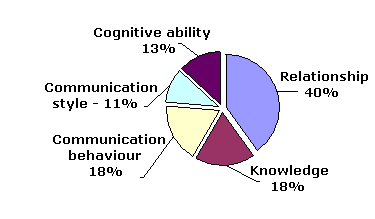
I like charts. I prefer graphs but charts will do. Whilst pondering Wilson & Olsson I encountered this article by Maureen MacKenzie.
I also like Rorschach inkblot tests - but not on Fridays. Can you tell me what you see?
NSW KM Forum: Dead French Guys
I am no longer a committee member of the NSW KM Forum but I reserve the right to attend and heckle speakers for having the temerity to hold opinions other than my own.
Tuesday's speaker was Michael Olsson. Michael talked a bit about Descartes, a little about Foucault and about the debate between himself & Tom Wilson. Tom likes cats. Tom doesn't like knowledge management. Michel & Rene are French and dead. Tom & Michael are neither of those.
Michael deserves props for bringing Foucault into KM and also using Foucault to discuss power. Discussions about power tend to get people hot under the collar. Those who have it don't want to draw too much attention to it (with some exceptions) as those without it might start asking some hard questions.
Tuesday's speaker was Michael Olsson. Michael talked a bit about Descartes, a little about Foucault and about the debate between himself & Tom Wilson. Tom likes cats. Tom doesn't like knowledge management. Michel & Rene are French and dead. Tom & Michael are neither of those.
Michael deserves props for bringing Foucault into KM and also using Foucault to discuss power. Discussions about power tend to get people hot under the collar. Those who have it don't want to draw too much attention to it (with some exceptions) as those without it might start asking some hard questions.
KM Books Wiki
Is there a book on Knowledge Management that you love? Or hate?
Do you yearn to share your love (or hate) with others?
Then help is at hand. Behold: The KM Books Wikispace!!!
Spread the literacy lurve.
Do you yearn to share your love (or hate) with others?
Then help is at hand. Behold: The KM Books Wikispace!!!
Spread the literacy lurve.
Sydney Bloggers Meetup
So despite not having been an active blogger for nearly a year outside the firewall, I went along to the Sydney Bloggers Meeting. I got poked into starting blogging again.
Thursday, July 20, 2006
Green Chameleon
OK - so I'm in Singapore this week & I finally got to meet Patrick, Paolina & Edgar from Straits Knowledge / Green Chameleon (thank you for lunch, people). Goh Su Nee (thanks for the lift home) of NTU / IKMS & Denise Quay (thanks for making it happen).
Given that 4 of us are (or have been) librarians, the conversation get a bit old skool (ah MARC, AACR2).
It was in the restaurant where we went to dinnerr that I encountered the story of the Samsui women for the first time.
Given that 4 of us are (or have been) librarians, the conversation get a bit old skool (ah MARC, AACR2).
It was in the restaurant where we went to dinnerr that I encountered the story of the Samsui women for the first time.
Thursday, July 13, 2006
Happiness
Simon Reynolds points to an article on happiness studies in the New Yorker. And a Princeton study tells us that Happiness & Money are not linked.
I think most people pursue cash for reasons other than the pursuit of happiness. We are not hard-wired by evolution to be happy but to survive & reproduce. These activities involve competition for status & resources. I don't think we can ever escape that.
As for happiness, as Darrin McMahon observes, the expectation that we have a right to be happy is a comparatively recent one.
What does this mean for organisations? Should they spend time trying to ensure that their employees are happy?
I think most people pursue cash for reasons other than the pursuit of happiness. We are not hard-wired by evolution to be happy but to survive & reproduce. These activities involve competition for status & resources. I don't think we can ever escape that.
As for happiness, as Darrin McMahon observes, the expectation that we have a right to be happy is a comparatively recent one.
What does this mean for organisations? Should they spend time trying to ensure that their employees are happy?
Larfs
Euan on levity
My sense of the ridiculous gets me into trouble. Many people have a hard time understanding that you can be funny & serious at the same time. It's one or the other.
And business is serious. And I am important.
Oh Yes.
My sense of the ridiculous gets me into trouble. Many people have a hard time understanding that you can be funny & serious at the same time. It's one or the other.
And business is serious. And I am important.
Oh Yes.
Passion
David Rymer talks about passion.
Lots of business people talk about "passion". Passion for the customer, passion for excellence, passion for innovation. Passion all over the place - apparently. Do we believe them?
Passion has its positives (joy fulfilment) & negatives (obsession, delusion). If organisations say they want passion, do they mean it? Are they prepared to deal with the consequences?
I have met lots of genuinely passionate people in businesses. I have also met many who could not give a toss. The small-minded would say that Australian passion did not allow the team to win the World Cup...
Monday, July 10, 2006
Rumours
No, not a Fleetwood Mac reference. This post from Trevor has got me thinking. Whilst the report is OK, it assumes that 1. rumours are bad and 2. the key reponse of management to rumours is to squash them.
Whilst there is some very sound advice here (e.g. if you tell the truth regularly then people might trust you more) there is a missed opportunity. Does the nature of the rumours circulating through your organisation tell you anything about values, culture, employee attitudes, etc? Should not be trying to systematically understand what drives rumour patterns in you organisation without being invasive about it?
Whilst there is some very sound advice here (e.g. if you tell the truth regularly then people might trust you more) there is a missed opportunity. Does the nature of the rumours circulating through your organisation tell you anything about values, culture, employee attitudes, etc? Should not be trying to systematically understand what drives rumour patterns in you organisation without being invasive about it?
Thursday, June 22, 2006
Blogging not "a nightmare"
Enraged by a potent cocktail of crappy weather & Alan Kohler's article in the SMH as referenced by Trevor Cook, I fired off an intemperate email to author. To his great credit, he replied that he might have been excessively negative...
Apart from the blogging diss, it's an interesting PoV on Aussie TV.
Apart from the blogging diss, it's an interesting PoV on Aussie TV.
Wednesday, June 21, 2006
My Headphones...
Success by The Winnie Coopers - downloadable here - catch the video...
Jesus Walks by Kanye West - Yes, yes, I know it's been around for a while but still, it gives me goosebumps...
Pretty much everything from Radiohead's tour...
Jesus Walks by Kanye West - Yes, yes, I know it's been around for a while but still, it gives me goosebumps...
Pretty much everything from Radiohead's tour...
Success!
The joint session with ISPI I referred to earlier went very well.
Robert Perey & John Loty did a fantastic session based on Appreciative Inquiry around the topic of "Marriage".
N.B. Altho everyone walks away from an AI session feeling sunny & happy, it did not lead to me getting hitched. So a 50/50 on the success score there...
Robert Perey & John Loty did a fantastic session based on Appreciative Inquiry around the topic of "Marriage".
N.B. Altho everyone walks away from an AI session feeling sunny & happy, it did not lead to me getting hitched. So a 50/50 on the success score there...
Strategic Questioning
The Facilitators Network ran a session on Strategic Questioning. The focus was on big questions about things rather than questions about big things (if you see the distinction).
Fran Peavey asks on the page linked to above: "Were you ever taught how to ask questions?"
If you were a researcher in the social or natural sciences then the answer is "yes". However, you are taught to ask a very specific kind of question - the testing of a hypothesis.
In other walks of life, we are not taught this skill. Which means there are vast tracts of our lives we do not approach properly because we either ask the wrong question or none at all.
Feel free to post questions you find interesting in the comments field. Here are a few to kick things off:
- What would it take to make people as excited about their local environment as their national football team?
- Why do businesses downsize employees & not shareholders?
- Why don't public relation people ever talk to the public?
Fran Peavey asks on the page linked to above: "Were you ever taught how to ask questions?"
If you were a researcher in the social or natural sciences then the answer is "yes". However, you are taught to ask a very specific kind of question - the testing of a hypothesis.
In other walks of life, we are not taught this skill. Which means there are vast tracts of our lives we do not approach properly because we either ask the wrong question or none at all.
Feel free to post questions you find interesting in the comments field. Here are a few to kick things off:
- What would it take to make people as excited about their local environment as their national football team?
- Why do businesses downsize employees & not shareholders?
- Why don't public relation people ever talk to the public?
Sustainability
ISPI Sydney ran a session on sustainability last night. As advertised, it was something of a mixed bag.
Andrew Ashner's talk on green manufacturing was fascinating & depressing. He went thru Industrial Ecology, Cleaner Production, Eco-Efficeny, Lifecycle Management & a host of other initiatives.
Paraphrasing his conclusions:
- If we carry on they way we are going we are screwed.
- There are lots of fine words about sustainability but comparatively little action.
- The methods & frameworks are good but too complicated for business people to get their heads round.
The Megaplanning approach to strategy also looked intriguing.
I suspect that Sustainability will have a similar role in the next decade to the one that globalisation has in this one & technology had in the 90s. Whether we can meet that challenge or not remains to be seen.
Andrew Ashner's talk on green manufacturing was fascinating & depressing. He went thru Industrial Ecology, Cleaner Production, Eco-Efficeny, Lifecycle Management & a host of other initiatives.
Paraphrasing his conclusions:
- If we carry on they way we are going we are screwed.
- There are lots of fine words about sustainability but comparatively little action.
- The methods & frameworks are good but too complicated for business people to get their heads round.
The Megaplanning approach to strategy also looked intriguing.
I suspect that Sustainability will have a similar role in the next decade to the one that globalisation has in this one & technology had in the 90s. Whether we can meet that challenge or not remains to be seen.
Why KM is hard to do
A Green Chameleon posts on why KM is hard to do.
The issue they focus on is that of "infrastructure" - systems & institutions that simultaneously enable & constrain.
The answers they come up with are:
- Consult intensively, but keep decision-making simple
- Establish and maintain clarity of purpose
- Acknowledge the baggage
- Manage the timeline
- Shorten and leverage learning curves
- Use social networks
- Provide for habit-changing strategies
- Demonstrate impact to stakeholders
Now there is some good stuff in the article - esp. observations on the nature of infrastructure. And the recommendations are solid & commonsensical.
KM is simple. Yet KM is hard. Reasons why this might be so have been occupying my thoughts recently.
As practical as the article is, I think it leaves out some key reasons why KM is hard to do:
- We think more is better. More knowledge is better knowledge. This assumption rarely holds.
- We have trained each other to be uncooperative from an early age. There is another word for collaboration at school... cheating.
- Most organisations begin KM programmes because they are responding to a traumatic change in their internal or external environment. However the result often ends up reinforcing the pre-change organisation more than the desired end state. It becomes a conservative part of the infrastructure that Patrick describes, a hindrance rather than a help.
The issue they focus on is that of "infrastructure" - systems & institutions that simultaneously enable & constrain.
The answers they come up with are:
- Consult intensively, but keep decision-making simple
- Establish and maintain clarity of purpose
- Acknowledge the baggage
- Manage the timeline
- Shorten and leverage learning curves
- Use social networks
- Provide for habit-changing strategies
- Demonstrate impact to stakeholders
Now there is some good stuff in the article - esp. observations on the nature of infrastructure. And the recommendations are solid & commonsensical.
KM is simple. Yet KM is hard. Reasons why this might be so have been occupying my thoughts recently.
As practical as the article is, I think it leaves out some key reasons why KM is hard to do:
- We think more is better. More knowledge is better knowledge. This assumption rarely holds.
- We have trained each other to be uncooperative from an early age. There is another word for collaboration at school... cheating.
- Most organisations begin KM programmes because they are responding to a traumatic change in their internal or external environment. However the result often ends up reinforcing the pre-change organisation more than the desired end state. It becomes a conservative part of the infrastructure that Patrick describes, a hindrance rather than a help.
Thursday, May 11, 2006
Feeds for Speed
I've started using Rojo as my RSS feed reader. Seems to work quite nicely, thank you. The extra interesting functionality is that it allows you to tag entries and then share these tags with your contacts. I'd love to do this but I don't know any other users. Anyone fancy volunteering?
Sunday, April 30, 2006
Old vs New Media
The Economist had a good survey on New Media. It quotes a media consultant as advising newspapers & magazines to make their content linkable rather than wall it off. I'd like ot link to that quote but The Economist has... walled it off. That aside, it's actually pretty good stuff.
And it relates directly to a recent post by Ross. There are two criticisms of the new media environment most frequently made by Trad Media pros:
1. No one reads blogs.
2. It's all nicked from mainstream media anyway.
Both of these are valid but miss the point.
1. Most blogs have a small number of readers - but that's OK. Most of the conversations I have are with small numbers of people rather than huge auditoriums. And a pub/cafe debate is a better metaphor than a news article for a blog.
2. Most bloggers will utilise whatever news sources they have. And those often happen to be from trad media. But most bloggers I know do not want to replace the BBC or the Wall Street Journal. The point for the blogger is what they add to the story. It's what you do with it that counts.
And it relates directly to a recent post by Ross. There are two criticisms of the new media environment most frequently made by Trad Media pros:
1. No one reads blogs.
2. It's all nicked from mainstream media anyway.
Both of these are valid but miss the point.
1. Most blogs have a small number of readers - but that's OK. Most of the conversations I have are with small numbers of people rather than huge auditoriums. And a pub/cafe debate is a better metaphor than a news article for a blog.
2. Most bloggers will utilise whatever news sources they have. And those often happen to be from trad media. But most bloggers I know do not want to replace the BBC or the Wall Street Journal. The point for the blogger is what they add to the story. It's what you do with it that counts.
Sydney Inner West KM Conference 2009
Speaking of conferences, I posted this to the ACT-KM list last year - which earnt me accusations of sillines & negativity from other posters. These accusations are, of course, absolutely correct but the post did actually deal with lots of issues around conferences that annoy people.
Dear Sir, I have discussed your kind offer to keynote with my fellow Conference Committee members and we would like to assess your appropriateness in more depth. If you can answer "yes" to the following questions then we can take this further:
- Is your paper a spiteful & thinly veiled attack on your enemies* posing an intellectual treatise?
- Was it assembled by a poorly-paid postgrad researcher on your behalf in less than one week?
- Does your seminar consist of not of actual case studies but projects carried out by others you read about in discontinued journals or ones you hallucinated after a bottle of claret too many?
- Do you remind seminar attendees how fortunate they are to be in your presence at least once every 10 minutes?
- Are crucial parts of your seminar only available in your book?
- Are crucial parts of your book only available in your seminar?
*real or created by your paranoid imagination
Let me assure that the venue will be the finest location in Sydney's Inner West willing to offer kick-backs to the committee.
Delegates will have maximum opportunities to suck up to potential employers & clients. However we can only guarantee that vendors will be muzzled & leashed until 8pm - after that, delegates are advised to either return to their rooms or seek sanctuary in the hotel bar.
The draft theme is: "Knowledge Management - Flogging A Dead Horse". At the end of Day 1, delegates will have the opportunity to literally flog a dead horse - which will then be lightly grilled on a barbecue for dinner.
Dear Sir, I have discussed your kind offer to keynote with my fellow Conference Committee members and we would like to assess your appropriateness in more depth. If you can answer "yes" to the following questions then we can take this further:
- Is your paper a spiteful & thinly veiled attack on your enemies* posing an intellectual treatise?
- Was it assembled by a poorly-paid postgrad researcher on your behalf in less than one week?
- Does your seminar consist of not of actual case studies but projects carried out by others you read about in discontinued journals or ones you hallucinated after a bottle of claret too many?
- Do you remind seminar attendees how fortunate they are to be in your presence at least once every 10 minutes?
- Are crucial parts of your seminar only available in your book?
- Are crucial parts of your book only available in your seminar?
*real or created by your paranoid imagination
Let me assure that the venue will be the finest location in Sydney's Inner West willing to offer kick-backs to the committee.
Delegates will have maximum opportunities to suck up to potential employers & clients. However we can only guarantee that vendors will be muzzled & leashed until 8pm - after that, delegates are advised to either return to their rooms or seek sanctuary in the hotel bar.
The draft theme is: "Knowledge Management - Flogging A Dead Horse". At the end of Day 1, delegates will have the opportunity to literally flog a dead horse - which will then be lightly grilled on a barbecue for dinner.
Conferences
On the new Green Chameleon, Patrick Lambe bags conferences and Vivian Kaye expresses her own doubts.
As a sometime organiser of the NSW KM Forum, I constantly struggle with how to make these sessions more participative vs. getting enough people through the door to make it worthwhile.
We have had some big-name speakers in the last few months and they tend to draw the crowds. However I have a problem with just getting in big names & letting them speak. It's not that they don't have anything to say (they do) or that attendees don't learn anything (they do - or so they tell me) but it takes attention away from the abilities & experiences of the practitioners in the room. It's a "broadcast" model of learning rather than a peer-to-peer one (think CNN vs. Bitorrent).
So how do we generate interest as well as increase participation? One option is the "guest facilitator" idea. David Rymer did this well at the Feb session. And our next session (this Thursday) is both facilitation-based & also introduces something else I'm keen on this year - liaising with other groups. The cool thing about KM is that it overlaps with some many other disciplines - it's at these fault lines that you tend to get the exciting possibilities. So this session is a joint event with ISPI.
As a sometime organiser of the NSW KM Forum, I constantly struggle with how to make these sessions more participative vs. getting enough people through the door to make it worthwhile.
We have had some big-name speakers in the last few months and they tend to draw the crowds. However I have a problem with just getting in big names & letting them speak. It's not that they don't have anything to say (they do) or that attendees don't learn anything (they do - or so they tell me) but it takes attention away from the abilities & experiences of the practitioners in the room. It's a "broadcast" model of learning rather than a peer-to-peer one (think CNN vs. Bitorrent).
So how do we generate interest as well as increase participation? One option is the "guest facilitator" idea. David Rymer did this well at the Feb session. And our next session (this Thursday) is both facilitation-based & also introduces something else I'm keen on this year - liaising with other groups. The cool thing about KM is that it overlaps with some many other disciplines - it's at these fault lines that you tend to get the exciting possibilities. So this session is a joint event with ISPI.
Cooperation Commons
Brought to you by the Institute for the Future & Howard Rheingold: The Cooperation Commons...
Monday, April 03, 2006
Processes & Stories
I had the pleasure of meeting Roger Tregear last week. Roger is something of process improvement guru with an interest in storytelling. Roger will presenting on using storytelling to support BPM later this year. I for one am waiting with interest.
Learning To Fly
So we had Geoff Parcell at that there NSW KM Forum last Thursday. And fantastic he was too.
Best bit: Geoff spent a lot of time talking about "knowledge-based benchmarking" - which sounds a bit shandy but is really about creating a common framework for conversations & learning. Geoff's work with BP is COOL. But his work with the UN around AIDS is COOLER...
Best bit: Geoff spent a lot of time talking about "knowledge-based benchmarking" - which sounds a bit shandy but is really about creating a common framework for conversations & learning. Geoff's work with BP is COOL. But his work with the UN around AIDS is COOLER...
Hello Stranger
Yes, it has been a long time since posts. I've been busy n stuff. I still love you. Really, I do...
Sunday, February 19, 2006
Decision Styles Revisited
Cast your mind back to a previous post on the variability of decisions styles as compared to organisational seniority. Well those wacky folk at Decision Dynamics have published evidence in the Feb 2006 Harvard Business Review pretty much saying the same thing.
Only with actual data & proof.
Also check out the interesting distinction between private & public decision styles of senior execs.
Only with actual data & proof.
Also check out the interesting distinction between private & public decision styles of senior execs.
A fourth metaphor
KM databases as dustbins.
Sometimes it's true. Database managers are dustmen. Users are scavengers. And content. Well, your content is...
Sometimes it's true. Database managers are dustmen. Users are scavengers. And content. Well, your content is...
KM & Learning: a match made in heaven?
Based on a question asked by Kaye Vivian on ACT-KM.
Having worked in this group for over 3 years I will make some observations:
- The training/learning/education space has been going through some changes. Traditionally, its methods were classroom training & textbooks. And its focus was around role-based skills development with side orders of career development & compliance (esp. in heavy industry & then financial services). Then in the 90s, computer-based training or eLearning became big news.
- However, most of those involved in learning have a shameful secret. We know that most learning does not occur within classrooms - but rather on the job. Coaching & mentoring programs can help here but increasingly they are looking to knowledge management for support around "just in time" learning programs.
- Some do claim that KM should be owned by learning. If the organisation perceives KM as primarily being a technical fix (e.g. a database or a portal) then the neglected "people" side of KM may be open to this.
- The actual ability of the learning function to take this on will be varied. People tend to fall back on what they know and if you are a fantastic workshop facilitator or a great instructional designer then nuturing a community of practice or running lessons learned activities can be an alien experience. The tensions between JIT Learning & prescriptive curricula are also becoming apparent.
- Most organisations manage where the cost goes rather than where the value is added. Training & education budgets tend to cost several times that of a KM program - so KM may end up a poor cousin.
- There is a lot of value to be had in linking F2F training with Community of Practice development and integrating eLearning with other content-based approaches to KM.
KM people have a lot to learn about the presentation/packaging/facilitation from the training community. In turn, trainers can gain a far broader insight into the lifecycle of learning & knowledge from KM folk.
I know of other organisations where these discussions are happening - e.g. a sales CoP at Roche Australia is being established by an eLearning expert.
A joint event around "Social Learning & Collaboration" is being planned between the eLearning Network of Australasia and various regional Aussie & Kiwi KM groups for the second half of this year. Stay tuned.
Having worked in this group for over 3 years I will make some observations:
- The training/learning/education space has been going through some changes. Traditionally, its methods were classroom training & textbooks. And its focus was around role-based skills development with side orders of career development & compliance (esp. in heavy industry & then financial services). Then in the 90s, computer-based training or eLearning became big news.
- However, most of those involved in learning have a shameful secret. We know that most learning does not occur within classrooms - but rather on the job. Coaching & mentoring programs can help here but increasingly they are looking to knowledge management for support around "just in time" learning programs.
- Some do claim that KM should be owned by learning. If the organisation perceives KM as primarily being a technical fix (e.g. a database or a portal) then the neglected "people" side of KM may be open to this.
- The actual ability of the learning function to take this on will be varied. People tend to fall back on what they know and if you are a fantastic workshop facilitator or a great instructional designer then nuturing a community of practice or running lessons learned activities can be an alien experience. The tensions between JIT Learning & prescriptive curricula are also becoming apparent.
- Most organisations manage where the cost goes rather than where the value is added. Training & education budgets tend to cost several times that of a KM program - so KM may end up a poor cousin.
- There is a lot of value to be had in linking F2F training with Community of Practice development and integrating eLearning with other content-based approaches to KM.
KM people have a lot to learn about the presentation/packaging/facilitation from the training community. In turn, trainers can gain a far broader insight into the lifecycle of learning & knowledge from KM folk.
I know of other organisations where these discussions are happening - e.g. a sales CoP at Roche Australia is being established by an eLearning expert.
A joint event around "Social Learning & Collaboration" is being planned between the eLearning Network of Australasia and various regional Aussie & Kiwi KM groups for the second half of this year. Stay tuned.
NSW KM Forum March Event - Karl-Erik Sveiby & Euan Semple
Treading Lightly - The Hidden wisdom of the World's Oldest People - Karl-Erik Sveiby, Professor in Knowledge Management, Hanken Business School
Followed by
Social Computing For The Business World - Euan Semple, Head of Knowledge Management, BBC
WHAT: Karl-Erik asked Tex: 'What is the word for knowledge in your Aboriginal language?' 'We don't have a word for it,' Tex replied. Tex is a Nhunggabarra man, painter and storyteller from northwestern New South Wales in Australia and Karl-Erik is a Swedish professor in knowledge management who currently lives in Finland. This was the first time they had met, and Tex's answer was so unexpected and so intriguing that Karl-Erik immediately became interested in learning more about the Nhunggabarra Aboriginal people. Karl-Erik was quite surprised when it turned out that the Nhunggabarra principles for organising society were context-specific leadership and knowledge-based organising; everyone in society had a leadership role in a specific area of knowledge and the leader role shifted depending on the context and who was the most knowledgeable.
WHO: Karl-Erik Sveiby is often described as one of the "founding fathers" of Knowledge Management. In 1986 he published his first book in Sweden, in which he explored how to manage "Knowledge Companies". His 12th book "Treading Lightly" is a celebration of, and a thank you to, Australia, the country where he lived nine years till 2004. It is a story about the oldest sustainable society on Earth and how they created value from their intangible assets. He is currently based in Helsinki, Finland where he is Professor in Knowledge Management at Hanken Business School. He is also Honorary Professor at Macquarie Graduate School of Management in Sydney, Griffith School of Management, Brisbane and Polytechnic University, HongKong.
WHAT: The internet enables "globally distributed, near instant, person to person conversations" - are you enabling such conversations inside your organisation? Are you interested in helping your people find each other, learn from each other and to use these connections to improve your efficiency and increase your ability to innovate.
WHO: In addition to 21 years culminating in a senior position in the BBC, Euan Semple has four years of unparalleled experience learning how to make the most of this wired-up world of work and how businesses can prepare themselves for the challenges and the opportunities they represent. He is highly connected to the most influential movers and shakers of this new environment and his workshops, which have often been described as inspirational, have already been experienced by many diverse audiences worldwide.
WHEN: 5.30 for 6pm Tuesday 7th March
WHERE: Standards Australia, 286 Sussex Street, Sydney NSW 2000.
HOW MUCH: Free! If you plan to attend, please RSVP by e-mail to: nswkmforum@gmail.com
Followed by
Social Computing For The Business World - Euan Semple, Head of Knowledge Management, BBC
WHAT: Karl-Erik asked Tex: 'What is the word for knowledge in your Aboriginal language?' 'We don't have a word for it,' Tex replied. Tex is a Nhunggabarra man, painter and storyteller from northwestern New South Wales in Australia and Karl-Erik is a Swedish professor in knowledge management who currently lives in Finland. This was the first time they had met, and Tex's answer was so unexpected and so intriguing that Karl-Erik immediately became interested in learning more about the Nhunggabarra Aboriginal people. Karl-Erik was quite surprised when it turned out that the Nhunggabarra principles for organising society were context-specific leadership and knowledge-based organising; everyone in society had a leadership role in a specific area of knowledge and the leader role shifted depending on the context and who was the most knowledgeable.
WHO: Karl-Erik Sveiby is often described as one of the "founding fathers" of Knowledge Management. In 1986 he published his first book in Sweden, in which he explored how to manage "Knowledge Companies". His 12th book "Treading Lightly" is a celebration of, and a thank you to, Australia, the country where he lived nine years till 2004. It is a story about the oldest sustainable society on Earth and how they created value from their intangible assets. He is currently based in Helsinki, Finland where he is Professor in Knowledge Management at Hanken Business School. He is also Honorary Professor at Macquarie Graduate School of Management in Sydney, Griffith School of Management, Brisbane and Polytechnic University, HongKong.
WHAT: The internet enables "globally distributed, near instant, person to person conversations" - are you enabling such conversations inside your organisation? Are you interested in helping your people find each other, learn from each other and to use these connections to improve your efficiency and increase your ability to innovate.
WHO: In addition to 21 years culminating in a senior position in the BBC, Euan Semple has four years of unparalleled experience learning how to make the most of this wired-up world of work and how businesses can prepare themselves for the challenges and the opportunities they represent. He is highly connected to the most influential movers and shakers of this new environment and his workshops, which have often been described as inspirational, have already been experienced by many diverse audiences worldwide.
WHEN: 5.30 for 6pm Tuesday 7th March
WHERE: Standards Australia, 286 Sussex Street, Sydney NSW 2000.
HOW MUCH: Free! If you plan to attend, please RSVP by e-mail to: nswkmforum@gmail.com
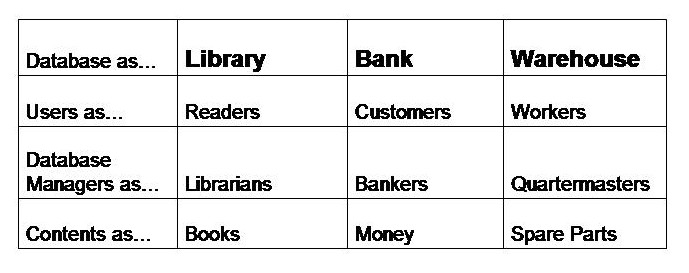
3. And finally... The Warehouse
If you have knowledge workers then they must make and ship knowledge (or so the manufacturing analogy goes). So they need parts to do that - which they get from the stores (after all, there are plenty of data warehouses) to assemble into product. And these parts need to be stored somewhere.
The part of this metaphor that is often forgotten is that inventory depreciates over time. The goal of many organisations is to carry as little physical inventory as possible. The lifecycle for documented experience is rarely considered. We talk about knowledge assets - over what period of time do you depreciate a knowledge asset?
(Now several folk have promoted Just In Time KM in various forms - incl. Tom Davenport & Dave Snowden. One question I would put to them is: JIT supply chains are efficient (& effective) but fragile - if the flow of materials & information in them is broken then there is no inventory to pad this out. Are such JIT KM approaches similarly fragile?)
In manufacturing your parts belong to a bill of materials that make up specific products. Documented experience rarely fits together like this. Without this bill of materials it is difficult to see how individual artifacts relate to each other.
The part of this metaphor that is often forgotten is that inventory depreciates over time. The goal of many organisations is to carry as little physical inventory as possible. The lifecycle for documented experience is rarely considered. We talk about knowledge assets - over what period of time do you depreciate a knowledge asset?
(Now several folk have promoted Just In Time KM in various forms - incl. Tom Davenport & Dave Snowden. One question I would put to them is: JIT supply chains are efficient (& effective) but fragile - if the flow of materials & information in them is broken then there is no inventory to pad this out. Are such JIT KM approaches similarly fragile?)
In manufacturing your parts belong to a bill of materials that make up specific products. Documented experience rarely fits together like this. Without this bill of materials it is difficult to see how individual artifacts relate to each other.
2. The Bank
This one is a little less intuitive than the library but still common. Put your intellectual capital in a knowledge bank just as you would put your financial capital in a bank. This metaphor has two parts: i. safety & ii. growth. You don't want to leave your capital hidden under your bed where mice or thieves can get at it. Put it in the bank and not only get peace of mind but a healthy rate of interest as well.
Managers have a perpetual fear of their key people walking out of the door and taking their knowledge with them. The KM database as bank calms this fear. It also equates knowledge with value - which was an exciting idea in the 90s when KM databases became popular. Whatever it may be, knowledge isn't the same as money. But the bank metaphor does provide some food for thought. The reason a bank can offer interest on deposits is that it loans out your capital to others at higher rates of interest - or invests them in some other fashion. Very few owners of KM databases sort to actively reinvest their intellectual capital elsewhere to generate additional value.
Managers have a perpetual fear of their key people walking out of the door and taking their knowledge with them. The KM database as bank calms this fear. It also equates knowledge with value - which was an exciting idea in the 90s when KM databases became popular. Whatever it may be, knowledge isn't the same as money. But the bank metaphor does provide some food for thought. The reason a bank can offer interest on deposits is that it loans out your capital to others at higher rates of interest - or invests them in some other fashion. Very few owners of KM databases sort to actively reinvest their intellectual capital elsewhere to generate additional value.
1. The Library
The library has long been associated with learning & information. Until the 90s this largely meant printed matter – papers, journals & especially books. In linking a KM database to a library the inference is clear: Just a library is a repository of human experience made accessible, so the database contains the experience of that particular organisation made accessible.
One aspect of libraries that is elided in this comparison is the importance of human interfaces. Most libraries have reference desks & front-of-house staff to assist users. These librarians must have a good knowledge of their collection plus the interviewing skills to find out what people want.
The metaphor breaks down when the relationship between users & content is examined. In most libraries, the content is owned by the library and the user borrows it and returns it unaltered. Writers & readers are clearly separate groups. In a KM database, the user may also be a creator. You would hope that users improve & update content to keep it fresh – writing comments in a library book is bad but this ain’t necessarily the case for project methodology. In short the library metaphor stresses a unidirectional flow between content and user.
One aspect of libraries that is elided in this comparison is the importance of human interfaces. Most libraries have reference desks & front-of-house staff to assist users. These librarians must have a good knowledge of their collection plus the interviewing skills to find out what people want.
The metaphor breaks down when the relationship between users & content is examined. In most libraries, the content is owned by the library and the user borrows it and returns it unaltered. Writers & readers are clearly separate groups. In a KM database, the user may also be a creator. You would hope that users improve & update content to keep it fresh – writing comments in a library book is bad but this ain’t necessarily the case for project methodology. In short the library metaphor stresses a unidirectional flow between content and user.
KM Databases
If George Lakoff is correct that the primary human tool for understanding the world is the metaphor then knowing the uses and limits of the three metaphors that individuals and organisations use to understand KM databases is important.
I would like to suugest that these are:
- Database as library
- Database as bank
- Database as warehouse
I would like to suugest that these are:
- Database as library
- Database as bank
- Database as warehouse
Thursday, February 02, 2006
Subject Matter Experts (2)
There was one critical area I forgot to discuss in the last post: SME availability.
If your expert is good & their subject is in demand then you can guarantee they will face a million calls on their time - of which yours will be just one. So how do you avoid getting sidelined?
Some suggestions:
Agree with the project sponsor upfront how much SME time you will need & when in the project you will need it. If you are an external provider, get it written into the contract.
Remember that you will need SMEs to check the final outputs as well as for initial information gathering. Do not be stingy in time allocation for this as it will take longer than most expect & will almost certainly be subject to cuts.
The best way to get an SME's attention is to lock them in a room with an instructional designer and their mobile phone turned off. If the SME & the design team a re not co-located then expect to double or triple your allocated development time. If they are not in the same time zone then increase it by 5.
You may have to "sell" the development project to the SME. Take time to understand what motivates them and link this to your training development project. Motivators can include:
1. "I understand that a lot of yout time is taken up with answering simple questions & providing informal training. Invest your time in this project and we can reduce the time you spend on the simple stuff so you can focus on things that are more interesting"
2. "This project will raise your profile within the organisation"
3. "Here's some money" (works with external SMEs)
Know who the SME reports to. If it's your project sponsor - fantastic! If not, you not only have to know what motivates your SME but also what motivates their manager - and have a benefits case for them as well.
Be flexible. If your SME can only spare 3 hours on a Sunday morning then you may have to go with that.
Do not overload your SME with tasks that could be done by someone else - and do not allow them to take on those tasks if they are under pressure. If you can only get an hour of their time then they shouldn't be spending half of that spellchecking.
Often it's all about negotiation (see the reference below for Getting to Yes).
If your expert is good & their subject is in demand then you can guarantee they will face a million calls on their time - of which yours will be just one. So how do you avoid getting sidelined?
Some suggestions:
Agree with the project sponsor upfront how much SME time you will need & when in the project you will need it. If you are an external provider, get it written into the contract.
Remember that you will need SMEs to check the final outputs as well as for initial information gathering. Do not be stingy in time allocation for this as it will take longer than most expect & will almost certainly be subject to cuts.
The best way to get an SME's attention is to lock them in a room with an instructional designer and their mobile phone turned off. If the SME & the design team a re not co-located then expect to double or triple your allocated development time. If they are not in the same time zone then increase it by 5.
You may have to "sell" the development project to the SME. Take time to understand what motivates them and link this to your training development project. Motivators can include:
1. "I understand that a lot of yout time is taken up with answering simple questions & providing informal training. Invest your time in this project and we can reduce the time you spend on the simple stuff so you can focus on things that are more interesting"
2. "This project will raise your profile within the organisation"
3. "Here's some money" (works with external SMEs)
Know who the SME reports to. If it's your project sponsor - fantastic! If not, you not only have to know what motivates your SME but also what motivates their manager - and have a benefits case for them as well.
Be flexible. If your SME can only spare 3 hours on a Sunday morning then you may have to go with that.
Do not overload your SME with tasks that could be done by someone else - and do not allow them to take on those tasks if they are under pressure. If you can only get an hour of their time then they shouldn't be spending half of that spellchecking.
Often it's all about negotiation (see the reference below for Getting to Yes).
Subject Matter Experts (1)
Adam Shapiro from MCQI posted the following question on ElNet about working with subject matter experts for training materials development.
Just addressing the first question, a lot of this depends on the nature of the subject matter.
If it's widely understood, well documented & stable then finding an SME shouldn't be too difficult & neither should getting their work checked.
You will face more challenges if the subject:
- Is a niche area.
- Has a small or non-existent literature.
- Is changing rapidly.
- Has several divergent (& mutually hostile) approaches.
Some comments:
Trust & personal recommendation can play a key role. Is this person respected by their peers & by your colleagues?
Who is the ultimate decision-maker / stakeholder - i.e. who is paying for course development? What are their opinions of the SME or the SME's approach? And what does the SME think of them? Ideally, these two should be aligned.
Most experts have egos. These need handling. Some think their expertise expands beyond their actual domain areas - into things such as instructional design. How much you massage these egos vs. battle with them is a moot point. Establishing your own credentials as an SME in your space is crucial. Getting to Yes & Dealing with People You Can't Stand have some useful things to say here.
Some SMEs are highly articulate. Others seem to spout pure gibberish. Your own interviewing & communication skills will be therefore be crucial.
A final word about scope & audience: Pitching material at the right level of understanding is a fine art. If you are unclear about the needs of your audience then do not expect to get the best out of your SME.
Ideally your expert will be well-respected, modest & a good communicator (and I have been blessed with those). But do not rely on this.
Regarding Piggy-in-the-Middle. The critical thing is to get out of being in the middle. Depending on context you can:
- Lock them in a room until they come up with a single point of view.
- Present both points of view in the final deliverable.
- Get the key stakeholder to make the final call (if it's a major content point).
- Agree an objective criteria for deciding between the two.
Do not let them wage proxy wars through you or slip through changes on the sly. After many painful experiences I have learnt that you can never avoid conflict, only delay it.
Having had some discussion of the role of subject matter experts, I'd be interested in hearing your strategies for ensuring that you get the best value out of your SMEs. I don't mean how do you flog them into a work frenzy, but rather, what are your strategies for ensuring that:
1. You have a good SME who knows their stuff to begin with;
2. You create an environment in which they can contribute to the best of their ability.
Also, what do you do when 2 SME's disagree and you're the piggy in the middle?
Just addressing the first question, a lot of this depends on the nature of the subject matter.
If it's widely understood, well documented & stable then finding an SME shouldn't be too difficult & neither should getting their work checked.
You will face more challenges if the subject:
- Is a niche area.
- Has a small or non-existent literature.
- Is changing rapidly.
- Has several divergent (& mutually hostile) approaches.
Some comments:
Trust & personal recommendation can play a key role. Is this person respected by their peers & by your colleagues?
Who is the ultimate decision-maker / stakeholder - i.e. who is paying for course development? What are their opinions of the SME or the SME's approach? And what does the SME think of them? Ideally, these two should be aligned.
Most experts have egos. These need handling. Some think their expertise expands beyond their actual domain areas - into things such as instructional design. How much you massage these egos vs. battle with them is a moot point. Establishing your own credentials as an SME in your space is crucial. Getting to Yes & Dealing with People You Can't Stand have some useful things to say here.
Some SMEs are highly articulate. Others seem to spout pure gibberish. Your own interviewing & communication skills will be therefore be crucial.
A final word about scope & audience: Pitching material at the right level of understanding is a fine art. If you are unclear about the needs of your audience then do not expect to get the best out of your SME.
Ideally your expert will be well-respected, modest & a good communicator (and I have been blessed with those). But do not rely on this.
Regarding Piggy-in-the-Middle. The critical thing is to get out of being in the middle. Depending on context you can:
- Lock them in a room until they come up with a single point of view.
- Present both points of view in the final deliverable.
- Get the key stakeholder to make the final call (if it's a major content point).
- Agree an objective criteria for deciding between the two.
Do not let them wage proxy wars through you or slip through changes on the sly. After many painful experiences I have learnt that you can never avoid conflict, only delay it.
Wednesday, February 01, 2006
The Maister Plan
Ross has drawn by attention to David Maister's web site. Several of my colleagues hold him in awe as the consultant's consultant so I rushed to check out the site. And it's a delight. DM seems to have taken up blogging & podcasting, he "gets" RSS, there are articles, seminar handouts & videos. The content itself is rock solid - including an article with the title "Marketing is a conversation"...
Tuesday, January 31, 2006
Disappearing email lists
The Yahoo-based ACT-KM list abruptly & mysteriously disappeared about 2 weeks ago along with 2 other KM lists. It has been restarted here. Props to Mark Shenk & Ron Rogers.
Yahoo did not state why the list was terminated.
Until today.
A Yahoo representative contacted the ACT-KM moderator and stated that the group was shut down due to complaint about violated trademarks owned by Hudson Associates. According to an article, their president likes to dress up as Attila the Hun - a role which may have gone to his head.
I would like to know the full list of terms trademarked by Hudson Associates. I pray that it includes "Knowledge Management" - that way we can finally ditch the term & do something more interesting.
Dan Kirsch has yet to provide an answer but I suspect that ACT-KM was caught in a cross-fire between rival US KM professional organisations. Which is akin to being savaged by consumptive sheep.
Yahoo did not state why the list was terminated.
Until today.
A Yahoo representative contacted the ACT-KM moderator and stated that the group was shut down due to complaint about violated trademarks owned by Hudson Associates. According to an article, their president likes to dress up as Attila the Hun - a role which may have gone to his head.
I would like to know the full list of terms trademarked by Hudson Associates. I pray that it includes "Knowledge Management" - that way we can finally ditch the term & do something more interesting.
Dan Kirsch has yet to provide an answer but I suspect that ACT-KM was caught in a cross-fire between rival US KM professional organisations. Which is akin to being savaged by consumptive sheep.
Monday, January 30, 2006
NSW KM Forum: Communities & Serendipity
Good CoP, Bad CoP: Are Communities of Practice a Structural Panacea or Essential Component of the KM Toolkit? Mark Andrews, National Knowledge Manager - Corporate, Freehills
Conversations on Serendipity: Management nightmare or hidden power shaping organisational agility? David Rymer, Thinker-In-Residence, Intuosity
WHAT: The last five years has seen a concerted shift from a technology to people focus in KM, with organisations setting up Communities of Practice (CoPs). However, little consideration is given to the role of alternatives.What can be done with more formal structures? How we can effectively tune an organisation to increase knowledge sharing? Mark Andrews will draw on experience from Capgemini, Sydney Water and Freehills to offer some answers to these questions.
WHO: Mark's KM experience spans Ernst & Young, Capgemini, Sydney Water and Freehills. He also lectures in Knowledge Management as part of the UTS MBA program. His background includes management consulting, HR management and IT project management.
WHAT: Agile organisations centre their knowledge on value creation. Agility (responsiveness, flexibility, and innovation) determines how successfully organisations meet their customers’ needs. David Rymer will draw on real world experience including The Israeli Air Force, venture capital start-ups and The Coca-Cola Company to examine how surfing serendipity shapes knowledge futures, sparks organisational change, fosters innovation and delivers economic outcomes.
WHO: David has enjoyed an eclectic career spanning marketing, technology, innovation, KM and organisational change in Australasia, Asia and the United States. David is the inaugural Thinker-In-Residence with Intuosity, a private Think Tank tasked with exploring the world of ideas, inspiration, intuition, curiosity and innovation. David is also Deputy Chairman of the Standards Australia’s Knowledge Management committee.
WHEN: 3.30 for 4pm until 5.30 pm Wednesday 8th February
WHERE: Standards Australia, 286 Sussex Street, Sydney NSW 2000.
HOW MUCH: Free! If you plan to attend, please RSVP by e-mail to
nswkmforum@gmail.com
Conversations on Serendipity: Management nightmare or hidden power shaping organisational agility? David Rymer, Thinker-In-Residence, Intuosity
WHAT: The last five years has seen a concerted shift from a technology to people focus in KM, with organisations setting up Communities of Practice (CoPs). However, little consideration is given to the role of alternatives.What can be done with more formal structures? How we can effectively tune an organisation to increase knowledge sharing? Mark Andrews will draw on experience from Capgemini, Sydney Water and Freehills to offer some answers to these questions.
WHO: Mark's KM experience spans Ernst & Young, Capgemini, Sydney Water and Freehills. He also lectures in Knowledge Management as part of the UTS MBA program. His background includes management consulting, HR management and IT project management.
WHAT: Agile organisations centre their knowledge on value creation. Agility (responsiveness, flexibility, and innovation) determines how successfully organisations meet their customers’ needs. David Rymer will draw on real world experience including The Israeli Air Force, venture capital start-ups and The Coca-Cola Company to examine how surfing serendipity shapes knowledge futures, sparks organisational change, fosters innovation and delivers economic outcomes.
WHO: David has enjoyed an eclectic career spanning marketing, technology, innovation, KM and organisational change in Australasia, Asia and the United States. David is the inaugural Thinker-In-Residence with Intuosity, a private Think Tank tasked with exploring the world of ideas, inspiration, intuition, curiosity and innovation. David is also Deputy Chairman of the Standards Australia’s Knowledge Management committee.
WHEN: 3.30 for 4pm until 5.30 pm Wednesday 8th February
WHERE: Standards Australia, 286 Sussex Street, Sydney NSW 2000.
HOW MUCH: Free! If you plan to attend, please RSVP by e-mail to
nswkmforum@gmail.com
Innovation - Think Play Do
Read or hear the recent ABC programme by Mark Dodgson on innovation.
Takeaways:
- Innovation as outcome vs process.
- Importance of play within innovation process (and a reference to Michael Schrage).
- A reference to one of the world's least boring economists.
Takeaways:
- Innovation as outcome vs process.
- Importance of play within innovation process (and a reference to Michael Schrage).
- A reference to one of the world's least boring economists.
More Evil
More breaking news of the fight of Good vs. Evil. Danny O'Brien of NTK tells us the epic (and funny) battle going on in the open source software environment.
See No Evil.
Hear No Evil.
Speak No Evil.
Cheers to Boing Boing.
See No Evil.
Hear No Evil.
Speak No Evil.
Cheers to Boing Boing.
Tuesday, January 17, 2006
Prediction Markets
The KM cluster is running an event in NYC on Prediction Markets hot on the heels of a West coast event.
John "KM Cluster" Maloney has recommended Chris Masse's site as a source on Prediction Markets.
I am not aware of much work in prediction markets in Australia - Andrew Leigh has co-written a paper on betting vs. polls and the 2004 Australian election.
Anyone got any ideas?
John "KM Cluster" Maloney has recommended Chris Masse's site as a source on Prediction Markets.
I am not aware of much work in prediction markets in Australia - Andrew Leigh has co-written a paper on betting vs. polls and the 2004 Australian election.
Anyone got any ideas?
Melbourne Lunch redux
Monday's Web 2.0 / any old excuse lunch is blogged about here by Andrew Mitchell.
I got to meet Andrew Rixon which led to an enticing but abortive conversation on representing social networks. Andrew namechecked Space Syntax. The standard node/edge visualisation of an SNA breaks down when you have to handle 100+ nodes. Andrew suggested a "streetmap" visualisation for social networks.
I think he's onto something.
I got to meet Andrew Rixon which led to an enticing but abortive conversation on representing social networks. Andrew namechecked Space Syntax. The standard node/edge visualisation of an SNA breaks down when you have to handle 100+ nodes. Andrew suggested a "streetmap" visualisation for social networks.
I think he's onto something.
Thursday, January 05, 2006
Talking about Pictures Part 2
And that other place entirely is: process
There has been some recent blogospheric discussion driven by Ross Mayfield's declaration of the end of process. In fact, what Ross advocates is:
They are the rules in stone that innovative types must always battle against.
Brushing aside whether the constant recreation of process is always a good idea ("Hey, screw the manual, we're going Open Source on the operation of this nuclear power plant - who wants to start a wiki?"), this position assumes that the processes in question are clearly documented and well understood by those involved in them.
This is not always the case. Rarely are we mindful of the processes we forge or follow.
We need to be able to describe it and/or visualise. If this sounds like I'm getting Buddhist on your ass - well I am.
Now, there is veritable tower of Babel of process description languages - ADF, UML, EPCs, CUL8R (I may have made that last one up). An attempt to forge an Esperanto (altho one that people actual use) of process mapping can be found in the Business Process Modeling Notation project.
What has this got to do with character? Well, process models are all about decisions. Here is one for Sydney cab drivers: "If the traffic light is green keep going. If the traffic light is yellow, then accelerate wildly in attempt to beat it. If the traffic light is red then hit the brakes and swear loudly".
Or as Robert McKee calls them: choices.
(To BE CONTINUED)
There has been some recent blogospheric discussion driven by Ross Mayfield's declaration of the end of process. In fact, what Ross advocates is:
At best, a process should serve as a reference model. Something that others can reference when completing a task. Something that can be leveraged for innovation, a boundary condition for experimentation at the margin.
They are the rules in stone that innovative types must always battle against.
Brushing aside whether the constant recreation of process is always a good idea ("Hey, screw the manual, we're going Open Source on the operation of this nuclear power plant - who wants to start a wiki?"), this position assumes that the processes in question are clearly documented and well understood by those involved in them.
This is not always the case. Rarely are we mindful of the processes we forge or follow.
We need to be able to describe it and/or visualise. If this sounds like I'm getting Buddhist on your ass - well I am.
Now, there is veritable tower of Babel of process description languages - ADF, UML, EPCs, CUL8R (I may have made that last one up). An attempt to forge an Esperanto (altho one that people actual use) of process mapping can be found in the Business Process Modeling Notation project.
What has this got to do with character? Well, process models are all about decisions. Here is one for Sydney cab drivers: "If the traffic light is green keep going. If the traffic light is yellow, then accelerate wildly in attempt to beat it. If the traffic light is red then hit the brakes and swear loudly".
Or as Robert McKee calls them: choices.
(To BE CONTINUED)
Social Software & Web 2.0 Lunch in Melbourne - Monday Jan 16th
Following on from the Sydney Social Software lunch & gossip session, there will be a rematch in Melbourne on Monday 16th. Location as yet undecided. If you are interested then post a comment to register interest and more details will appear anon.
***UPDATE. Location will probably be Regina Pizzeria in the QV precinct.
***UPDATE. Location will probably be Regina Pizzeria in the QV precinct.
Communities, SNA & Personality Types
There has been a recent discussion on the Communities of Practice discussion list about personality typing and activities within communities.
Are specific personality types likely to perform specific roles within a community?
There has been some conjecture from proponents of DISC and Myers-Briggs as to which personality types might gravitate to which specific roles.
Another framework to use are Belbin's team roles. Rather than say: "Your presonality is structured in this way" (which Myers-Briggs definitely does and DISC does to a lesser extent), Belbin says: "These are the roles you find in a team - which ones are you most comfortable with?"
If you have a stable model for the roles in a community, then presumably you could create a set of questions that might identify the suitability of individuals for each of those roles.
As several people have pointed out, such personality profiling systems do not take account of the development of individuals - i.e. they tend to be static rather than dynamic.
In the course of this conversation, Valdis Krebs alluded to an informal study by an academic acquaintance that looked at correlations between Myers-Briggs types for students and SNA metrics (e.g. centrality) for their positions in their study-related networks. Interestingly, no correlation was found...
Are specific personality types likely to perform specific roles within a community?
There has been some conjecture from proponents of DISC and Myers-Briggs as to which personality types might gravitate to which specific roles.
Another framework to use are Belbin's team roles. Rather than say: "Your presonality is structured in this way" (which Myers-Briggs definitely does and DISC does to a lesser extent), Belbin says: "These are the roles you find in a team - which ones are you most comfortable with?"
If you have a stable model for the roles in a community, then presumably you could create a set of questions that might identify the suitability of individuals for each of those roles.
As several people have pointed out, such personality profiling systems do not take account of the development of individuals - i.e. they tend to be static rather than dynamic.
In the course of this conversation, Valdis Krebs alluded to an informal study by an academic acquaintance that looked at correlations between Myers-Briggs types for students and SNA metrics (e.g. centrality) for their positions in their study-related networks. Interestingly, no correlation was found...
Comments
Thanks to a prod from Andrew Mitchell, I have changed the settings on my "Comments" function so now posters do not have to register to post a comment - but I get to moderate them first. I want opinions & insights - not offers for low-cost extensions to various parts of my anatomy.
Tuesday, January 03, 2006
An Ear For The Crowd
Many people I know are scared of public speaking. So they go to Toastmasters or on presentation skills courses.
There are plenty of role-models in the public speaking arena: politicians, preachers & poseurs.
Fewer people are worried about their listening skills. Which is odd - because most of us will do more listening in the course of a day than public speaking. And most of us are pretty bad at it.
So who are our great public listeners? As listening tends to be a private & personal activity, there aren't that many.
There are plenty of entertainers masquerading as interviewers.
However, there are a few that do it well. Denton has his moments. As, in a very different way, does Parkie.
There situation is unnatural in that they are not just listeners but intermediaries on behalf of an audience (some of whom are present in the studio and most of whom aren't). But there are some things that carry over.
One critical issue is attention. With a good listener, you know that this person is listening to what you say. Now some recommend that 100% attention is critical. However, it is possible to "over-attend" to someone. Some people do not actually like eye contact. I am odd in that I find it very difficult to share potentially embarrassing information over the phone (altho it's less difficult in person) - I prefer using instant messaging if possible.
Another is silence. Silence can be scary in conversations. But it can be a good thing. It's s sign to the speaker that the listener is paying attention - and is happy to wait for them to find the words they need to say. I think we need to have silence practice more regularly.
Which reminds me of a Steve Wright joke.
There are plenty of role-models in the public speaking arena: politicians, preachers & poseurs.
Fewer people are worried about their listening skills. Which is odd - because most of us will do more listening in the course of a day than public speaking. And most of us are pretty bad at it.
So who are our great public listeners? As listening tends to be a private & personal activity, there aren't that many.
There are plenty of entertainers masquerading as interviewers.
However, there are a few that do it well. Denton has his moments. As, in a very different way, does Parkie.
There situation is unnatural in that they are not just listeners but intermediaries on behalf of an audience (some of whom are present in the studio and most of whom aren't). But there are some things that carry over.
One critical issue is attention. With a good listener, you know that this person is listening to what you say. Now some recommend that 100% attention is critical. However, it is possible to "over-attend" to someone. Some people do not actually like eye contact. I am odd in that I find it very difficult to share potentially embarrassing information over the phone (altho it's less difficult in person) - I prefer using instant messaging if possible.
Another is silence. Silence can be scary in conversations. But it can be a good thing. It's s sign to the speaker that the listener is paying attention - and is happy to wait for them to find the words they need to say. I think we need to have silence practice more regularly.
Which reminds me of a Steve Wright joke.
Sunday, January 01, 2006
Talking about Pictures Part 1
It's a truism among writers that character & characterisation are two different things.
Over to Robert McKee for a moment:
We'll come back to Robert later but first we need to go to another place entirely... (TO BE CONTINUED)
Over to Robert McKee for a moment:
CHARACTERIZATION is the sum of all observable qualities of a human being, everything knowable through careful scrutiny: age and IQ; sex and sexuality; style of speech and gesture; choices of home, car, and dress; education and occupation; personality and nervosity; values and attitudes – all aspects of humanity we could know by taking notes on someone day in and day out. The totality of these traits makes each person unique because each of us is a one-of-a-kind combination of genetic givens and accumulated experience. This singular assemblage of traits is CHARACTERIZATION. . . but it is not CHARACTER.
True CHARACTER is revealed in the choices a human being makes under pressure - the greater the pressure, the deeper the revelation, the truer the choice to the character's essential nature.

We'll come back to Robert later but first we need to go to another place entirely... (TO BE CONTINUED)
Subscribe to:
Posts (Atom)

 Posts
Posts

