Monday, October 27, 2008

Age of Conversation TWO!!!

Some of you may remember the first Age of Conversation last year. Well Gav & Drew have been hard at it and assembled another 200+ writers, ranters and relics for Age of Conversation
TWO!!! The aim is to raise $15k for Variety (the children's charity not the magazine). You can buy the book here.

Go on. Treat yourself...


Adrian Ho, Aki Spicer, Alex Henault, Amy Jussel, Andrew Odom, Andy Nulman, Andy Sernovitz, Andy Whitlock, Angela Maiers, Ann Handley, Anna Farmery, Armando Alves, Arun Rajagopal, Asi Sharabi, Becky Carroll, Becky McCray, Bernie Scheffler, Bill Gammell, Bob LeDrew, Brad Shorr, Brandon Murphy, Branislav Peric, Brent Dixon, Brett Macfarlane, Brian Reich, C.C. Chapman, Cam Beck, Casper Willer, Cathleen Rittereiser, Cathryn Hrudicka, Cedric Giorgi, Charles Sipe, Chris Kieff, Chris Cree, Chris Wilson, Christina Kerley (CK), C.B. Whittemore, Chris Brown, Connie Bensen, Connie Reece, Corentin Monot, Craig Wilson, Daniel Honigman, Dan Schawbel, Dan Sitter, Daria Radota Rasmussen, Darren Herman, Dave Davison, David Armano, David Berkowitz, David Koopmans, David Meerman Scott, David Petherick, David Reich, David Weinfeld, David Zinger, Deanna Gernert, Deborah Brown, Dennis Price, Derrick Kwa, Dino Demopoulos, Doug Haslam, Doug Meacham, Doug Mitchell, Douglas Hanna, Douglas Karr, Drew McLellan, Duane Brown, Dustin Jacobsen, Dylan Viner, Ed Brenegar, Ed Cotton, Efrain Mendicuti, Ellen Weber, Eric Peterson, Eric Nehrlich, Ernie Mosteller, Faris Yakob, Fernanda Romano, Francis Anderson, Gareth Kay, Gary Cohen, Gaurav Mishra, Gavin Heaton, Geert Desager, George Jenkins, G.L. Hoffman, Gianandrea Facchini, Gordon Whitehead, Greg Verdino, Gretel Going & Kathryn Fleming, Hillel Cooperman, Hugh Weber, J. Erik Potter, James Gordon-Macintosh, Jamey Shiels, Jasmin Tragas, Jason Oke, Jay Ehret, Jeanne Dininni, Jeff De Cagna, Jeff Gwynne & Todd Cabral, Jeff Noble, Jeff Wallace, Jennifer Warwick, Jenny Meade, Jeremy Fuksa, Jeremy Heilpern, Jeroen Verkroost, Jessica Hagy, Joanna Young, Joe Pulizzi, John Herrington, John Moore, John Rosen, John Todor, Jon Burg, Jon Swanson, Jonathan Trenn, Jordan Behan, Julie Fleischer, Justin Foster, Karl Turley, Kate Trgovac, Katie Chatfield, Katie Konrath, Kenny Lauer, Keri Willenborg, Kevin Jessop, Kristin Gorski, Lewis Green, Lois Kelly, Lori Magno, Louise Manning, Luc Debaisieux, Mario Vellandi, Mark Blair, Mark Earls, Mark Goren, Mark Hancock, Mark Lewis, Mark McGuinness, Matt Dickman, Matt J. McDonald, Matt Moore, Michael Karnjanaprakorn, Michelle Lamar, Mike Arauz, Mike McAllen, Mike Sansone, Mitch Joel, Neil Perkin, Nettie Hartsock, Nick Rice, Oleksandr Skorokhod, Ozgur Alaz, Paul Chaney, Paul Hebert, Paul Isakson, Paul McEnany, Paul Tedesco, Paul Williams, Pet Campbell, Pete Deutschman, Peter Corbett, Phil Gerbyshak, Phil Lewis, Phil Soden, Piet Wulleman, Rachel Steiner, Sreeraj Menon, Reginald Adkins, Richard Huntington, Rishi Desai, Robert Hruzek, Roberta Rosenberg, Robyn McMaster, Roger von Oech, Rohit Bhargava, Ron Shevlin, Ryan Barrett, Ryan Karpeles, Ryan Rasmussen, Sam Huleatt, Sandy Renshaw, Scott Goodson, Scott Monty, Scott Townsend, Scott White, Sean Howard, Sean Scott, Seni Thomas, Seth Gaffney, Shama Hyder, Sheila Scarborough, Sheryl Steadman, Simon Payn, Sonia Simone, Spike Jones, Stanley Johnson, Stephen Collins, Stephen Landau, Stephen Smith, Steve Bannister, Steve Hardy, Steve Portigal, Steve Roesler, Steven Verbruggen, Steve Woodruff, Sue Edworthy, Susan Bird, Susan Gunelius, Susan Heywood, Tammy Lenski, Terrell Meek, Thomas Clifford, Thomas Knoll, Tim Brunelle, Tim Connor, Tim Jackson, Tim Mannveille, Tim Tyler, Timothy Johnson, Tinu Abayomi-Paul, Toby Bloomberg, Todd Andrlik, Troy Rutter, Troy Worman, Uwe Hook, Valeria Maltoni, Vandana Ahuja, Vanessa DiMauro, Veronique Rabuteau, Wayne Buckhanan, William Azaroff, Yves Van Landeghem

Friday, October 17, 2008

my future bank is blank

If you are an Australian social software head then you probably know all about Cheryl, uBank/NAB and the demise of My Future Bank. At this point it would be de rigeur to beat up Loaded Tech/NAB and point you towards my own top 10 tips for corporate social software engagement (because this is, of course, all about me).

Here's my take:

  • Cheryl's been writing about the marketing attempts of Australian banks for a while. I think her criticisms were valid and I share a lot of her frustrations with the way Australian banks operate. I want the banks to get it. I want them to give a flying **** about their customers but I am not convinced they do.
  • The more observant of you may have noticed a little turbulence in the financial markets at the moment. Perhaps many people are not liking bankers presently...
  • ...However the question of what my our future bank(s) should be has never been more important. We desperately need more consumer engagement from our banks - N.B. "engagement" does not equal "advertising".

So here's the pitch. A bunch of us re-start MyFutureBank. The banks are invited. Consumers are invited. Governments & NGOs are also invited.

Let's have this conversation.

Thursday, October 16, 2008

actkm 2008

Massive shout out to the team who organised and contributed to the actKM 2008 conference in Canberra this week. Here are the presentations from Day 1 (including my own). Further reflections will follow on the weekend.

webifying the australian government

Did you know there is a Director, Web Policy & Online Technologies in Canberra who is responsible for making the Australian government all Web 2.0 n stuff? I didn't until a couple of days ago when I got an email for her. I had written to AGIMO to enquire as to what had happened about this. Of course in between sending the mail & getting the reply, I found this. There is undoubtedly some good stuff going on - such as Lindsay Tanner sticking his head above the parapet.

Apparently there are several events going on in Canberra in the next few months around this. Has anyone out there been invited?

It seems that the government are trying to achieve a radical goal (online engagement with their citizens) through traditional means (consultations, expert advice, behind-the-scenes meetings). N.B. If this is not the true state of affairs then educate me.

I really want to encourage them to go beyond that. Can we have members of AGIMO blogging about this for example? One thing I love about people like Jason Ryan is that they walk the talk. Come on my little cuddly bureaucrats, it's nice and sunny out here.

Sunday, October 12, 2008

slower (perchance to dream)

I was at the Dave Gurteen / NSW KM Forum brekkie on the topic of "Is KM social?" with many of the usual suspects and some new faces.

One thing that stuck with me, while social software tools allow you to record experience as part of people's work, they can't fully solve one of the key challenge that knowledge managers face. Whilst embedding stuff and making things easy for people is very important, we've actually got to be wary of making things too easy for people.

Sometimes it's our job to say "Stop".

A key part of learning (individual or collective) is reflection. If you aren't willing to stop and reflect on what you have done (and its consequences), then you do not get the full benefit of that experience. We all probably need a weekly thinking time.

Just as our bodies need time to process the events, thoughts & emotions of the day (which may well be a key function of sleep), so we need time to process. Sometimes we do need to be asleep on the job (metaphorically).

One symptom of sleep deprivation is psychosis. If we cannot process our lives, we risk going insane.

Join the dots.

Wednesday, October 01, 2008

game 3: sticky wiki

A wikipedia entry referencing the minister of your department includes derogatory nick-names given to your minister by the press. A senior advisor to the minister approaches in the tea room one day and asks you – as the office “computer whiz” – to delete the offending remarks.

What do you do?

game 2: forumed is forewarned

An internet forum site with thousands of Australian users – tidalwave.com.au – includes a number of threads that are openly critical of the work that your group does. One thread in particular contains accusations that you and your group have acted illegally. These accusations are false. A major national newspaper has been lifting stories from this forum site on a regular basis and you fear that the contents of this thread could be next. You contact the media relations advisor in your department but they do not appear to understand the risks involved.

What do you do?

game 1: unleash the blogs of war

You are a public sector manager. Anne, a member of your staff, has a public blog where she posts mostly personal news about her rock climbing hobby. You don’t read the blog but occasionally she sends round email links to her climbing photos on the blog to her colleagues in the office. One afternoon you receive an angry phone call from Tricia, a senior public servant in another department. Apparently Anne has posted a blog entry critical of activities of that department that involve the rock climbing community. The post is not defamatory but some of the readers' comments attached to the blog post are abusive. Tricia believes that Anne has broken her terms of employment and wants to institute disciplinary proceedings against her.

What do you do?

social media public sector decision games

I'm doing a conference session in Canberra in November. My session is Social Media and the Public Sector - Examining the Hazards and their Policy Implications. I thought I'd kick things off with some decision games. I will post the 3 exercises up here. You can post up:
  • The decision you would make.
  • How you might change the scenario to make it more challenging or useful for participants.

the election (no, not that one)

Just before I went overseas (hence the lack of blogging), I exercised my rights as a new Australian citizen voted in my local elections. Australia differs from the UK in that voting in compulsory – punishable by a fine if you do not participate.

If you ask most Australians which system is better then they say the Australian one. However if you dig a little deeper and ask if they believe that Australia has a more engaged and informed electorate or a better standard of government than the UK then they tend to answer no.

The big problem here is that compliance is a poor way of generating engagement. The option of “going thru the motions” is a very tempting one for most people when presented with a compulsory activity. Do I need to point out any similarities with the world of organisational change and knowledge management?

Sunday, September 07, 2008

ban "leadership"

This post by Bob Sutton chimed with some of my own thoughts. "Leadership" is a term much bandied about - and unhelpful. "Leader" is of some use but should be handled with care. "Leading" is fine.

There are people who lead others sometimes. They go somewhere (literally or metaphorically) and other people go with them. They are leading. The moment those people stop following them, they are no longer leading. And remember, they have to be going somewhere - otherwise that's "staying in one place" not "leading". Staying in one place is not necessarily a bad thing altho it doesn't have the same ring to it and probably won't get you laid: "Hi - I'm a leader stayinoneplacer."

Why am I being so picky? Well I think there are several things wrong with the industry that has grown up around leadership:
  • It focuses on "being a leader" rather than "leading" and hence deals with characteristics & qualities rather than actions. Thinking that training courses & seminars will help you lead others more than actually, y'know, trying some leading is misplaced.
  • It focuses on the individual (allegedly) doing the leading rather than the mass of people moving a direction (or more often several related directions). This allows the majority of us to disown our responsibility to lead ourselves: "I can't do this, I'm not the leader".

So what do I propose instead?

  • If you want to be a leader then try some actual leading. Head off somewhere and see who comes with you. It needn't be somewhere hard to get to. If no one will come then ask them why. They may have some good reasons.
  • The rest of us need to recognise that everyone's a leader. "It's not my responsibility" isn't really a good enough answer, ever. One day I may even live up to this.

Friday, September 05, 2008

networkplace

The commercial arm of EngineerswithoutFears continue their punishing publishing schedule.

Thursday, September 04, 2008

making stuff happen if your thang is professional


The prompter behind the previous online post was some thinking around online communities with a corporate -> consumer focus (which is more about knowledge gathering). This post has been triggered by some conversations I've been having with different groups with more of a professional flavour - i.e. how do you nurture communities in a nascent professional group (either within an organisation or outside it)? This is more about knowledge dissemination.

I'm afraid there's another 2x2 matrix here but bear with me. It assumes that knowledge is unevenly distributed - there are experts and newbies. But it also assumes that even those with only some knowledge can help each other.
  1. You probably need to start with some face-to-face (or coaching-intensive online) training - a mix of presentations & activities that use a "trad" learning approach. This is be demanding of time but relatively focused.
  2. A website (with a blog, podcasts & videos) is helpful here. In effect this is your online broadcast system. This will require the building of content.
  3. Once those newbies are up and running, they need to support each other. Something online helps here (esp. if people aren't co located). It may be a discussion board, an email list, a wiki or even a community tool like Ning. This will require facilitation.
  4. Those newbies need to meet F2F occasionally to share what they have learned (both good & bad). This should take the form of an unconference like BarCamp - or some similar participatory approach.
Participants start on the left as learners. Then move to the right as colleagues then spread back across to the left as experts, colleagues and still learners (because ultimately we all remain learners).

The trick is to get these different activities to reinforce each other in a positive feedback loop. Trad education has been good at 1. eLearning made a stab at 2. But those charged with making people smarter need to get their heads around all four to be effective.

Wednesday, September 03, 2008

online communities - everybody's gotta thang

After this post, I've been thinking about online consumer communities. I was working on something very, very complicated and then realised that the first thing I had to write was actually very simple.

Communities
View SlideShare presentation or Upload your own.

the whole truth and

So I was thinking about the relationship between fact & fiction in relation to storytelling and some observations came to mind.

1. Fact & fiction are agreements. A story both teller and listener believe to be true could be labelled "fact" and one both agree is untrue could be "fiction". However those are not the only possibilities. A story the listener believes to be true but not believed to be so by the teller would probably be labelled a "lie" by a 3rd party. And the reverse might be labelled a "error" (or a delusion at worst). 2. In most social situations there is no 3rd party umpire of truth & falsity. And agreement on "fact" and "fiction" can be murky esp. when talking about interpretations and motivations. We end up negotiating a lot of this stuff.

3. The belief of a listener or teller in the story is not always constant. As a teller I might distort events for any number of reasons both innocuous (e.g. compressing events to make the story easier to follow) or self-serving (to influence the listener). As listener I constantly revise my belief of the story - esp. if I don't know the teller well or doubt their reliability.

I'd like to do an experiment where a story is told over the phone with teller and listener being able to control a slider with "totally true" at one end and "totally false" at the other. The result would be a pattern drawn on the above matrix (with a time component - you might show that with a gradual change in colour from start to end).

I wonder what the patterns would look like?

presentation station

So after Louise Mahler's sesh last night, I believe I ended up ranting about the 3 things that people need to do to become better presenters (because there are too many bad presentations that happen every day and life is too short to endure them).
  1. Learn how to tell a story. A beginning. A middle. And an end. Pick up a book like this. Watch some movies. Read some books. Listen to experiences that other people tell you that stick with you. Try putting together a story of your own. Then cut out the bits you don't think you need. Then cut it back some more. What is the fewest number of words you need to tell your story? Can any word you add justify its place?
  2. Learn how to tell a story with pictures. This book and this one and maybe this one. Learn to paint. Or doodle a lot. Or try getting busy with the camera. Try to tell a story using only pictures. I dare you.
  3. Learn how to be in front of others. Now that you only have a few words and a few pictures - what is there left? There's you. Hear your voice. Raise your gaze. Feel yourself inside your body. Get up on a stage and do something unrelated with your work - acting, dance, comedy, stripping, it doesn't matter.

And when you've done all this, you'll probably rock (but you'll rock as yourself).

I am annoyed that so much of our education focuses on the analytic side of things & not this stuff. This shouldn't be hard but we seem to make it hard for ourselves. Go figure.

transformer

As much as McKinsey might bug me, they have an enviable access to senior execs and do churn out useful surveys. This one on organisational change is similar to their Web 2.0 number in that it kicks off with the bleedin’ obvious:

  • Transformations with well defined targets tend to do better than those without.
  • Having visible involvement from top people is important.
  • Focusing on the positive as well we the negative (go positive deviants!)*

The final point is that organisations need to engage with their people in a bunch of different ways – incl. the use of narrative (in there above performance targets & incentives). I also like it that role modelling comes out at number four. At 7 pages it is way too long - compile it down into a single page that you can stick (framed or otherwise) on your CEO's door.

*Interestingly, it seems that it helps if you have a roughly equal mix of emphasising problems and successes – so think on that appreciative inquiry.

Tuesday, September 02, 2008

make some noise

The Sound of Leadership wasn't a promising title but the session run by Louise Mahler with the Creative Leadership Forum last night was excellent. Favourite exercise: The importance of pelvic thrusts in vocal delivery. Favourite fact: The reason behind the epidemic of vocal chord nodules among telephone sex workers.

intelligence test

We have emotional intelligence and then social intelligence, political intelligence, narrative intelligence and last night I heard about vocal intelligence. I like the idea of expanding our understanding of abilities to include more than just the mathematical or logical - as Howard Gardner has explored. However I'm getting a bit tired of hearing about "xxx intelligence". I'm not completely sure why but it's starting to feel overused - even cliched. It's in danger of taking a bunch of stuff that people do (and do well or poorly at different times in their lives) and making it mysterious.

The problem with the original Intelligence Quotient (IQ) is that it reified (& unified) something that might not be one simple thing (I find the Flynn Effect fascinating). These other intelligences could broaden out the notion of what it means to be an effective human being OR they could just be marketing labels that obscure more than they illuminate.

What next "blogging intelligence", "eating intelligence", "gardening intelligence"?

Saturday, August 30, 2008

banker lend to thy self

Cheryl has a post about banking customer service that ends with the comment:
And they wonder why consumers hate banks. No amount of ads about happy banking, or your bank caring about you, or determined to be different, or whatever they advertise to try to convince you they care about you, will ever change the banking culture.
I am currently having some issues with my bank. And three thoughts strike me:
  1. The greatest asset that many large, underachieving businesses (and that includes you, Australian banks) have is customer apathy. Seth Godin puts it well.
  2. The banks are in for a(nother) shock. A few months ago, when I was still working for a certain financial regulator, a former exec from one of the retail banks came in to teach us about the banking sector. It was an interesting day but one thing stuck in my mind. In the 90s, the Australian banks were caught out when their prime business (loans and especially home loans) got hit by new entrants such as Aussie Home Loans - with lower rates and better service. Now the growth market that banks are targeting is "wealth management" - i.e. advising people on where to spend their dosh. Based on this former executive, the banks seem to think that this market is theirs for the taking. I think it's more likely to be a repeat of the loans situation - i.e. new entrants creaming the incumbents with better offers and stronger service.
  3. Banks don't seem to understand that customer service means actually serving your customer, not your customer serving you. Not putting lots of bureaucracy in their way. Not hitting them with fees for everything (and most recently I have been charged a fee due to one of their cockups). If and when I become wealthy, why should I trust my future to someone who has no concern for me beyond the next fee hit opportunity and cannot be trusted with the most basic activities?

Monday, August 25, 2008

article at the other place

Find it here. More to come over the next few weeks.

Thursday, August 21, 2008

podcast - mary-alice arthur on stories

A further podcast on stories with Mary-Alice Arthur in New Zealand.

Download the mp3.

Show Notes:
00:00 - Mary-Alice meets storytelling @ Glistening Waters
03:00 - Leader as Storyteller as Megatrend
04:00 - 4 Million Dreams in New Zealand
05:00 - 9/11 as one catalyst
05:30 - Appreciative Inquiry as a response
07:00 - Personal & national dreams
07:30 - Youthconnect
08:00 - "Not just one thing to do"
11:00 - What does a conversation sound like as a drumbeat?
13:00 - The Paua Shell
15:50 - Hoberman Sphere

Sunday, August 17, 2008

more dramas

I spent Saturday hanging out with Johnnie Moore during his visit to Sydney and going off on lots of tangents. Our conversations seem to consist of multiple tangents from which we eventually return to our original topic. Anyways, one topic that came up was “mindfulness”. In fact it’s been coming up a lot recently (e.g the slow community podcast with Nancy). Here are some reasons why:

  • Life is getting faster & more complicated. If we don’t manage ourselves we will get washed away.
  • We have more autonomy – no one else (e.g. a government, a paternal corporate) is going to manage our lives for us. And as our lives get more complicated and more unique, others are less able to provide us with reliable advice.
  • Mindfulness & self-restraint have been part of our religious traditions. As we have lost our dependence on religion so we have lost some of the resources that religion provided.

So in discussing drama triangles, I see them as part of a personal project around mindfulness and self-understanding. James R comments that they are negative – which can be true if they are used in an accusatory way: “You are a rescuer”; “You are a victim”. I see them more as tools to aid self-awareness (as KT notes): “What games am I involved in here and do I really want to play them?”

There’s something existential - recognising that you have a choice and more freedom than is immediately apparent.

Thursday, August 14, 2008

the enterprise 2.0 drama triangle


If you are driving Enterprise 2.0 in your organisation, there are 3 roles you might be lured into playing:
  • Rescuer. "Help, help, we cannot collaborate with Notes Teamrooms, surely your wiki will save us!" "Why yes, it will solve all your problems and all will be right with the world."
  • Victim. "Why does no one pay attention to me? Why cannot I get any traction with the business?"
  • Persector. "You are doing this all wrong! You are idiots with your impenetrable chains of emails and your hidden information nests!"

Other people will tempt you to into playing these roles by playing one of their own. They may even shift between them.

However, the budding Enterprise 2.0 dude (or dudette) must avoid playing any of these roles and being caught on the point of a Karpman Drama Triangle. There are other options:

  • Rather than being a victim, admit your vulnerability. You are not all knowing and some of your experiments may fail. But you will fail fast, fail early and learn from your failures. You will succeed.
  • Rather than rescuing, reach out. Connect with others trying to achieve similar things in other organisations. Tap into your internal & external networks.
  • Rather than persecute, persevere. The "Enterprise 2.0" buzz term will disappear but the need to help smart people work together smarter will not.

Keep the faith people.

A hat tip to KT for putting me on to these in the first place.

enterprise 2.0 presentation

Here is the presentation from yesterday's conference.
E2point04ip
View SlideShare presentation or Upload your own.

Some notes to go with the presentation:
  • This is a revised draft of this presentation I created back in April - with slides 23-28 owing a heavy debt to Patrick Lambe's rewrite.
  • The email detox podcasts with Luis Suarez & co: Part 1, Part 2 & Part 3.
  • The five steps are: i. ban attachments & instead link to files sitting in a more permanent location; ii. if an email conversation involves more than 5 people then shift it elsewhere, iii. make your tools as simple to use as possible, iv. encourage role modelling of good behaviours by senior staff, v. begin with a small step in the right direction rather than trying to change the world in one go.
  • The 5 issues to consider are: i. security. email is insecure anyway but you need to clearly establish access guidelines for each location where documents are stored, ii. privacy with new tools is important - e.g. staff need to understand how public their discussions will be, iii. develop an archiving / retention policy for your documentation, iv. do not hit staff members with too many tools, they could be overwhelmed with choice, v. consider different IP options for ownership of content esp. if consumers are involved.
  • The Cynefin framework is introduced because social software adoption is complex (lots of interacting agents, inherently unpredictable) rather than simple or complicated. Waterfall approaches do not work. More on Cynefin here: http://www.research.ibm.com/journal/sj/423/kurtz.html
  • The final page concerned drama triangles. There will be a blog post on this topic soon.

Tuesday, August 12, 2008

grow your wiki

Stewart Mader is tearing himself away from the Tooheys-scented teet of Sydney/San Fran wiki-meisters Atlassian and going out on his own. As a fan of Stewart's work, I wish him all the best and advise you to check out his offerings.

enterprise 2.0 tomorrow

I will be chairing Enterprise 2.0 for Information Professionals tomorrow and then presenting the following day. See you there.

I promise to be as nice as possible.

Friday, August 08, 2008

what's wrong with shameless self-promotion?

So Seth Godin* has posted a comment where he says he doesn't think of the tribes thang as "shameless self-promotion". I don't think there's anything wrong with shameless self-promotion. Provided it's done well. If you give people stuff that is useful for them then it's fine. Bad shameless self-promotion is another matter. Taking attention ("lookatmememmeme") and giving nothing back is one of the surest ways to earn enmity short of calling someone's mother a street-walker.

There may also be a cultural issue here. Seth is American. I am English. What looks like shameless self-promotion to me probably looks like diffident introversion to him.

*Well I assume it's him. On the internet no one knows you're a lactose intolerant scuba diver.

Thursday, August 07, 2008

the strange fate of steve denning

I am currently have a mild stoush with Steve Denning on actkm. I had the experience of meeting the "best keynote speaker on leadership innovation business narrative & storytelling" in DC earlier this year and it was as thrilling as any encounter between two awkward introverts (one of them still jetlagged) can be.

I picked up The Secret Language of Leadership in the US and have been listlessly flicking through it. It's not a bad book. In fact more than anyone else coming out of the KM arena, SD has found a topic and a style that resonates with business managers. He writes well. He has his sights set on the lucrative "leadership" market* and he's using storytelling as his differentiator. On their own, each book is good. But the overall sense is one of diminishing returns. This book is quite similar to the last. Either SD is a prisoner of his own success or he simply hasn't noticed yet.

He also has a worrying tendency (along with many other popular management writers in the US) to offer fixed recipes that allegedly cover every situation. This makes it easy for the reader to digest and gives them to confidence to apply the advice but life isn't always that simple. For example, the weakest chapter of The Leader's Guide to Storytelling is the chapter on innovation. Storytelling gets advanced as pretty much the only way of advancing innovation within organisations and it all gets a little silly.

The next book concerns high-performing teams. My fear is that there will be a thin veneer of new research over familiar themes. My hope is that it will be something completely new.

*This market will always exist because most people want the kudos of being a leader without the pain of actually leading. Books, seminars, workshops - anything but actually taking other people somewhere new.

Wednesday, August 06, 2008

ted's dead baby, ted's dead

I was having lunch with a mate a few weeks ago and we got onto discussing TED. Now don't get me wrong, there are lots of mighty fine talks on the TED site (and doubtless at the TED event). Inspiring, funny, clever, etc, etc. But we were both a bit sick of people going on about it and wanting to do copies. Y'know - fly in a few international speakers with books to their name, dress everything up in slick audio-visuals & charge $3-4k a head.

TED is interesting because it is unique. Which means that if you want to copy it you are missing the point. On the other hand, Interesting South tried something same same but different: Yes we have interesting speakers but they have a short period of time to make their mark. BarCamp also (punk) rocks - every man & woman is a star. Open Space offers a different model again.

For me there is a continuum between the pure performance that many trad conferences have fallen into and the emergent will-to-action of an Open Space. Given my personality, I prefer the local & the anarchic but it's up to you.

How do we make something better than TED? How do we make something new?

collaboration open space

So in the comments on the Open Publish post, Michael Sampson pulls me up. We were all talking about the human aspects of collaboration weren't we? I'd disagree. We were still talking about the human aspects of collaboration technologies. Which given the audience at OP is not necessarily a problem. But where in the environment for IT folks & KM folks & HR people & internal comms dudes & facilitators & suchlike. And even regular ordinary workers?

I'm not sure there is anywhere (please feel free to prove me wrong).

So I want to run an Open Space event around "collaboration". Only we probably won't use that term as such. Suggestions for a better one please. I dunno whether this will be 20 people in a church hall or 1000 people at the exhibition centre. You tell me.

I'll need the following:
  • Volunteers/helpers/collaborators from different disciplines.
  • Sponsors. I ain't gonna make any money out of this but if we want a big location then it's gonna cost $20-30k.
  • And you. Yes, you.

mckinsey on web 2.0

You may recall EwF covering McKinsey's last Web 2.0 report. Well the Jesuits of Management Consulting are at it again with "Building the Web 2.0 Enterprise" (yours for your soul email details). They have a broader survey base than AIIM (but far less depth than the boys from Boston) and I can't comment on the other decent source of Web 2.0 business survey info because Forrester charge a day's wages for two pages of comment ("Our exhaustive research with IT decision-makers indicates that ECMs can be difficult to implement")*.

Anyway the McKinsey report is definitely worth a look-see. It seems that blogs, wikis & RSS are up and web services are down. The top uses are managing knowledge & improving collaboration. And companies where the business drives usage rather than IT seem to be more satisfied (which even the report acknowledges is kinda a "duh" observation but one worth reinforcing it seems). One result is that Asia-Pacific businesses have an unusually high level of satisfaction with Web 2.0 tools. But the survey doesn't tell you why. Lots of tasty hints, not much in the way of satisfying detail.

*At some point I will buy & read "The Groundswell" but I'm unusually time-poor at the moment.

Tuesday, August 05, 2008

slow communities & pace layering

Further to Nancy's work on Slow Communities and her question: "when do you need to be fast & when do you need to be slow?". This reminds me of Stewart Brand's idea of pace layering - which he developed to describe our physical environment but which also applies to our digital one (it's a favourite of information architects). Different layers change/move at different rates.

Activities, relationships & artifacts all shift at different rates. One thing important in our lives (individual & collective) is that they don't all do it at the same rate - the variety is good for us.

tribes vs communities

"Community" is term with a whole bunch of associations: collective, fuzzy boundaries, warm, social, perhaps a little suffocating, possibly a bit leftie.

"Tribe" has a different set of associations: also collective but harder boundaries, us against them, perhaps a little ruthless, possibly a bit atavistic.

Etienne Wenger and his many collaborators produced the theoretical work around communities of practice in learning & knowledge sharing. Meanwhile marketers & advertisers chose to identify* consumers based on the tribe they belonged to - trying to link abstract market segmentations to real social relations.

As online social spaces proliferate, we are hearing more about communities & tribes. But the more I hear these terms, the less I think they usefully describe what these new social groupings are. Few of our online groupings are either "tribes" or "communities" as most people would understand them. They are too loose, too ephemeral, too dynamic.

We don't have the words for what these things are yet. We have a language lag.

*And identity is important to both communities & tribes.

online communities & "tribes"

I've been a participant in online communities for over decade (pretty soon after I started exploring the internet seriously in 1996). Being a bit of a freak and therefore poorly serviced by my immediate physical communities, I launched myself into groups concerned with music, chaos magic and other stuff. I was a little surprised when things I learned about this environment could be applied to the KM issues I encountered in my job. Two things have come out in the last couple of weeks that take this a little further.

Beeline Labs, Deloitte & The Society of New Communications Research have a report on the "Tribalization of Business". This does not refer to middle managers covering themselves in paint and hitting each other with sticks (altho the trend for outward bound "team bonding" exercises in the 90s wouldn't make this topic surprising). Rather it's about the involvement of businesses in online consumer/customer communities - for customer service, marketing, new product development, etc. It's actually a pretty solid piece of research - with some nifty presentation ideas (use of Slideshare as a channel, using tag clouds rather than graphs).
Some of the takeaways for me are unsurprising:
  • The focus should be on creating a good environment (including seeding the space with good content).
  • It's about customers talking to each other (based on social rather than market imperatives).
  • You need to support/facilitate them (many organisations seem to be under-resourcing their communities).
  • It's not just about your community - but the range of online environments that your customers interact with each other in. You are part of an ecosystem and you (and your ego) have to accept that.
I don't think that we will be replacing Chief Marketing Officers with Chief Community Officers anytime soon for two reasons: i. For most organisations, there is more to marketing than online communities & ii. Online community champions need a different skills set to the traditional marketer. This new role has the following skills:
  • Someone who is embedded in the same online environment as your customers outside your community environment as well as inside it.
  • Someone who excels at listening, facilitating & doesn't need to hog the limelight.
  • Someone who understands their own organisation very well.
  • Someone with some understanding of the role of the community in marketing & new product development & customer service & PR.
  • Someone who can pick up the tools quickly and make them work (but probably isn't a technologist).
Meanwhile Seth Godin has a wizard wheeze to promote his new book. Which is on tribes funnily enough. So Seth put up an invite on his blog to join his tribe (on Ning natch). All you have to do is pre-order his book and you're in. Well, you were. The invite was closed after 24 hours due to demand. Seeing as I was probably going to buy SG's book anyway (and I can still cancel it from Amazon if I change my mind) I pitched in. Some observations so far:
  • SG's Ning group has nearly 3000 members. Many of them are like SG - shameless self-promoters who sometimes have something interesting to say. It feels very crowded - and already some structures have either emerged or been imposed to cope with that.
  • What do these people have in common? Well, Seth. There seems to be a lot of "Seth, Seth, look at me" behaviour. Hopefully this will die down after a bit and people can start talking to each other.
  • Ning seems to cope with a few hundred people relatively well but less so with thousands.
Things to check out:
Just as "collaboration" will become a much-abused buzz word, so "tribes" & "online community" have hit the peak of the hype cycle. More reportage as it happens.

open publish redux

So a major theme at Open Publish 2008 was "collaboration".
  • Brett Jackson (in his capacity as a recently-departed employee of Atlassian) started off well, dipped into a puff-piece and then came good in the end.
  • Michael Sampson talked about expertise location & some other collaboraty stuff.
  • Cairo Walker talked about working with the WWF - and included some interesting facts about bees & elephants.
  • James Robertson had some interesting points about collaboration - including the distinction between the internal (collaboration) & external (publishing) roles of team collaboration.
  • Nerida Hart presented on the LWA work she has been doing.
I have two concerns with all this talk of collaboration:
  1. Keeping the focus purely on collaboration technology rather than all the other elements.
  2. Making it concrete & specific. Who wants to collaborate on what and why? Because not all collaboration situations are the same and what works well for a co-located team will not work for a global community of interest. "Collaboration" (like "knowledge" or "innovation") is a word that covers a multitude of sins.

mobile

The last couple of weeks have been a bit crazy so I haven't been able to blog as much as I like. Apart from Open Publish there have been some other things going on - including two events around mobile technology.

AIMIA ran an event on augmented reality. There were four speakers:
  • Jason Collins from Alcatel-Lucent demoed some work with Georgia Tech. Live magazine ads & posters that cameras can recognise and then trigger content on your phone such as video.
  • The next dude might have been either Adam Dunne or Peter Bray -pretty sure it was the former. Stuff on QR codes & Telstra. QR codes make the world clickable - a hyperlink on every surface.
  • Viveka Weiley talked about the AR toolkit and some other stuff. VW obviously knows a lot but had some difficulty articulating that.
  • Aaron Stafford from Adelaide talked about wearable computing & the Hand of God. Aaron was pretty blunt about the current user experience offered (it's a bit shaky and the equipment is a pain) but there are some obvious applications - augmented gaming, real estate & construction, etc.
The second event was Mobile Monday (which was bloody packed). Two pressos here:
  • Xumii - a mobile social network site aggregator aimed at Gen Ys. Interesting tool but I suspect there is a low barrier to entry for this kind of product and they are still in beta.
  • Justin Baird from Google. This was the headline act and a bit of a let-down. We learnt that mobile will be big (no **** sherlock) and that Google have some creepy ads for SMS Search. Android looks like it might have some cool stuff in it but that's all for the geeks really.
So two main takeaways from these:
  • Expect to see QR codes everywhere before the end of the year. Also expect to see QR spam/junk data and marketing successes & failures (success uncorrelated to spend) in the same timeframe.
  • Expect to see a plethora of mobile social networking technology - most of it aimed at teenagers. The first generation will simply be aggregators - then the next generation will start introducing rich media & location-based services.
Oh and I'll be getting an iPhone in a few months but I'm waiting for the data plans to sort themselves out first.

Thursday, July 31, 2008

Thursday, July 24, 2008

podcast - slow communities with nancy white

Nancy has been writing & talking a lot about "slow community" recently - video, slides & post here & here. Sadly Ed Mitchell couldn't join us as planned (but we'll nab him again in the future).

One thing we didn't tackle in the podcast was the matter of practical tactics: What should community members & coordinators do?

Answers on a postcard please...

Download the mp3

00:00 - Nancy's conversations about slow communities
03:30 - Matt's fast community anecdote
06:00 - When is slow appropriate?
06:30 - The importance of sustainability
07:15 - Fast is good for social media experiments
08:00 - We need to learn & reflect
10:30 - Rhythm, pausing & athletics
12:15 - Organisational seasons & hurricanes
14:00 - More is not necessarily better
15:30 - Community obesity
17:00 - Networks & comununities
18:00 - Admitting that you have a problem
20:00 - Mindfulness & self-awareness as critical skills
22:30 - Nancy applies the brakes with meditation
24:00 - What do we really need?

Wednesday, July 23, 2008

podcast - story (2) - tony quinlan, geoff mead & ron donaldson

I joined Tony Quinlan, Geoff Mead (Centre for Narrative Leadership) & Ron Donaldson for a discussion on stories

Download the mp3

00:00 - Tony tells us the one about Joseph Campbell & the IBM manufacturing plant
03:15 - Geoff Mead tells us the one about the conference & the storytellers
05:45 - Ron Donaldson tells us the one about English Nature
07:50 - Stories need space (& time)
09:30 - The simplest story can be the most effective: Geoff & the wet Wednesday in Nottingham
11:45 - Metaphors: Tony with the anthill & the meteor
14:30 - Ron with the twice washing of the sand
19:30 - Tony tells us about the new leader
21:00 - Ron tells us about story circles
22:00 - Geoff tells us about leading as a verb
24:00 - Leadership as contextual and worst practice
25:30 - Stories as triangulation
27:00 - Stories as cultural glue
27:30 - Oxytocin, laughter & bonding
28:45 - Story not necessarily benign
29:00 - Overcoming divisions

podcast - enterprise 2.0 - doug cornelius & stewart mader

Last week I had the pleasure of talking to Doug Cornelius & Stewart Mader about all things Enterprise 2.0 (sadly Stephen Collins had to drop out at the last minute).

Download the mp3

00:00 - Doug visits the Enterprise 2.0 conference in Boston
02:45 - Many many vendors - they love E2.0!
04:00 - The CIA & Intellipedia
04:30 - Wachovia Bank
06:15 - Stewart goes Web Content 2008, Enterprise 2.0 in Italy & 2008 WikiSym
07:45 - Social Network Analysis of Wikipatterns
08:15 - iPhone location-based social networking service & Stewart's dog's bladder
09:15 - Wikis cease to be a novelty - beyond Wikipedia
10:30 - CIA again
11:45 - My favourite Clay Shirky quote - are we boring yet?
12:30 - Training as a barrier to adoption - wikis are simple
13:20 - Email is not the zenith
14:45 - Wikis get out of the way
15:15 - Wikis as the iPod box
17:00 - What will happen in 2009?
19:00 - The steady curve rather than the tidal wave
21:00 - Wikis as a natural solution for unstructured information
22:10 - Writing the "wikipatterns" book on a wiki
23:30 - It's not about shocking people
24:30 - Awe instead
25:00 - The Bush reference I can't censor
25:15 - Giving & taking
27:45 - Wiki adoption happens at the lunch table
30:45 - The future of traditional blogs inside the enterprise
33:00 - The melting pot of tools
34:00 - The globalisation of everything

podcast preview - salty language

Doug, Stewart & I discuss the finer points of swearing. Not mission critical but a lot of fun and only 2 mins long.

Download the mp3

Tuesday, July 22, 2008

upcoming attractions

I will be at Open Publish next Thursday, telling you the truth about Enterprise 2.0 and then Enterprise 2.0 for Information Professionals a couple of weeks after that.

In the virtual world, there are podcasts on Enterprise 2.0, Story & Slow Communities that will be released very shortly.

And then my alter ego will be in the line-up here this Saturday and here on Monday August 4.

Thursday, July 17, 2008

community in a can: ning vs wordframe vs facebook

Over the past few months, I've got involved in more & more online communities using a range of different tools.

Ning - Getting more & more popular, Ning offers a pretty good entry-level on-line community environment. You can create a personal profile & blog, you can incorporate a forum, video & photo uploading, all that stuff. Obviously Ning has been designed for "fun" communities than "work" communities. There is no native wiki functionality and no real document management capabilities. Boo!!!

Wordframe - As the name suggests, Wordframe is more about words. You get wiki stuff, a document library and the ability to incorporate external blog feeds into the environment. Wordframe is not available for free.

Facebook (again) - As noted earlier, I'm not too keen on Facebook. However given its omnipresence you could do worse for an online community environment. Apart from a forum & a wall, you don't get a whole heap of functionality and precious little customisation. But sometimes it's more about where you are than what you're doing.

This Techcrunch article is pretty good - though might now be out of date...

plaxo vs facebook vs linkedin - social network showdown

Andrew McAfee recently added to the Serena Facebook-As-Intranet case study. Which prompted an SNS review thang in my head.

I still have issues with Facebook. I think it's a bit of a mess and doesn't give enough control to the individual in terms of identity management. 80 million active users (according to Facebook) would disagree. However it is still a trail-blazer in terms of application development (even if most of them are really annoying).

LinkedIn has 24 million members (according to LinkedIn). If anything, LinkedIn is not messy enough. The Q&A functionality is nice. LinkedIn is the kind of social networking tool you could introduce to your mother (after your rebellious phase of wearing a leather jacket and hanging out with MySpace). As I once got a job via LinkedIn, I can't really complain but there is so much missing from here - e.g. some network visualisation stuff would be cool. LinkedIn seem to know this and have added status updates and some feed integration. But no one would make LinkedIn their intranet.

Plaxo is surprising me. After it gained an uneviable reputation as a spam machine a few years back, I went back in there a few weeks ago to be confronted with LinkedIn's cooler cousin. The design is smooth and spare. And the Pulse page pulls together your connections' blogs, Twitter, Flickr, del.icio.us, etc. Again - a bit lacking on the visualisation front.

I think it takes a particular kind of organisation to have Facebook as their intranet. However there are an increasing number of organisations creating SNS applications within the firewall. Over the next 12 months, we're definitely going to see links between these internal applications and the external ones listed above. And that's without mentioning the acquistion of VisiblePath by Hoovers....

the sorting out

I have been pondering the purpose of this blog. And I'm still pondering. But here are some preliminary conclusions:
  • I'm kinda over republishing links to content without adding anything to them. You can see what's floating my boat on del.icio.us.
  • There is the other blog - which will be the home of all things to do with the business. In the end, I may merge the two (which means bad news for half of the extensive ghost writing teams I use - come on guys, polish those insights or it's back to road sweeping for you). At the moment, I want Engineers without Fears to be more playful & collaborative. The podcasts will still be coming via this channel.
  • If it's short, it'll be on Twitter - unless it's really, really good. I mean Oscar Wilde good.
  • There may be some more media experimentation. The podcasts are fun but I think this can all be taken further...

Tuesday, July 15, 2008

podcast - zombie marketing - sean howard & katie chatfield

Join Sean Howard, Katie Chatfield & myself for a discussion of: Zombie Marketing. I don't know much about marketing by Sean & Katie do.

Download the mp3.

Show Notes:
00:00 - Interesting Moose
01:20 - Zombie Marketing 1: Crazy Rug Sale Marketing
02:40 - Zombie Marketing 2: Late Night Ads In The Early Evening
03:20 - SuperBowl
05:00 - Angelina Jolie's Lips
08:30 - Mobile Advertising
09:00 - Pharmaceutical Mystery Stories
11:00 - Beauty Products & White Coats
12:30 - Science Montage Advertising
13:55 - The Justice League Of Brands
14:20 - Product Placement - Gossip Girl
16:00 - Product Placement - Drugs & Guns
17:00 - Clothing & Branding
20:00 - Anti-Zombie Marketing
21:30 - Not Letting You Love It
23:30 - Showers
26:30 - Phone Spammer Bus Burning Vacation
27:00 - AT&T Outbound Atrocity

Monday, July 14, 2008

hybrid meaning making: human / computer cognition

Basil: Can't we get you on Mastermind, Sybil? Next contestant Sybil Fawlty from Torquay, special subject the bleeding obvious.

Back in April, I posted about the Powerhouse Museum's use of human tagging along with automatic indexing.

A flood of things have triggered some further thoughts on this topic. I finally got round to reading Clay Shirky's stuff on gin, sitcoms & cognitive surplus. Then CapitalD sent out tweet with this video presentation by Luis von Ahn on human cognition. Big Lou is running a game called ESP that generates metadata on photographs under the guise of providing entertainment. Sneaky huh?

Meanwhile on the other side of town...

I am doing some research around photography & images at the moment - and encountered the Second international Photo Metadata Conference held in Malta a month ago. One presentation that caught my eye was by Chris Town on Imense.

Imense is a search engine that uses automated image processing to generate results.

Time for a showdown: Imense vs Google Images.

Round One. Let's start with something simple: a "Syndey sunset". Here is Imense & here is Google. Really not that much in it. Some good stuff and nothing wildly off-beam. A tie.

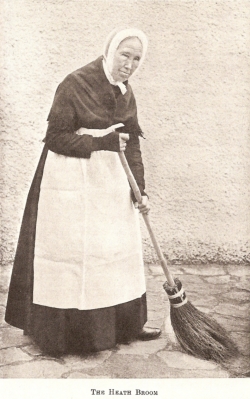
Round Two. How about "an elderly lady holding a broom"? Here's Google. The image on my list is a palpable hit however number 3 ain't even close. Over to you Imense. Er, Imense? What's that? "Sorry, no results found. Please change the query or search options and try again." Nul point there.

Round Three. Time for something metaphysical - how about "sadness"? Google comes back with these and Imense comes back with these. On the whole, both pretty darn miserable. Another tie. Keep going.

Round Four. OK - I like the work of Powell & Pressburger so how about something from The Red Shoes. So in goes "red shoes movie" and out comes? Well Google's first link is for this but by image number 4 it gets there. And Imense? Not even close.

It's 2-4 to Google. This is may simply be down to the number of images that Imense is dealing with - a larger pool with give better results. But it seems that while Imense may work with obvious stuff ("I need a picture with 3 people being chased down a beach by a dog"), it doesn't seem to handle the non-obvious stuff better.

How could Big Lou's approach dovetail with Chris's?

My suspicion is that our attempts to deal with the vast amounts of stuff (words, pictures, sounds) that we are producing will require a human/computer hybrid approach. This will make two groups unhappy - those that believe that raw computing power can solve any problem and those that believe that machines have no role to play in human meaning making.

For the rest of us, it's all very promising.

apple: technology that chicks like

There is an old, old diss in electronic dance music: "It's OK I guess. Yeah, I can really see gurlz liking that".

Because blokes like nerdy detail - fiddling about with basslines & noises & gadgets & suchlike. Design as an autistic journey up your own fundament. Whereas chicks tend to prefer music that makes sense as more than pure experiment - as something social & sociable, as something useful & desirable. Of course, the irony was: whenever chicks left a scene (be it jungle, UK garage, etc), the originality of the output would nosedive. The tension in dance music is between giving people what they want and then showing them what they never knew they wanted. Between experiment & familiarity.

Anyway, I was mildly surprised by the level of excitement shown by various women in my life about the new iPhone. These aren't just gadgets - these are designer objects (like a Marc Jacobs or Prada creation). And all designer objects are ultimately social objects of one sort or another.

I am not sure what the links between the iPhone &, say, Funky House are. But I suspect they could get me into very hot water. What do you think?

Sunday, July 13, 2008

search as point of sale

Google has become an advertising powerhouse because it catches people at that special moment: When they know they need something and are trying to find it. They may not be willing to spend money then & there but they are more willing to hand over the cash than when they are engaged in some non-related activity such as brushing their teeth or walking the dog.

Intranet or internal search within an organisation should be prized by those offering internal services - such as HR, Training, Facilities, etc. It offers you that opportunity to reach people when they need you - esp. in large organisations where actually finding the people responsible for these is often tricky.

Yet based on the lack of effort put into search engine effectiveness, these groups do not seem to get this. Why is that?

Tuesday, July 08, 2008

value networks & new media

This is what I wanted for Pubcamp. Full respect to the Journalism That Matters crew.

Hat tip: Patti Anklam

Sunday, July 06, 2008

podcast - viv mcwaters & geoff brown on facilitation

More podcast goodness with Viv McWaters & Geoff Brown (who have their own podcast channel called Winkipod).

Download the mp3.

Show Notes:
00:00 - Introduction - Sick kids, adrenalin junkies & improvisation.
05:00 - Geoff's camping holidays: Being Prepared vs. Having A Plan.
09:30 - Matt bounces up and down on the unscripted trampoline.
11:30 - Facilitation begins long before the event.
16:30 - Facilitation as transformation.
18:20 - What happens "beyond the event horizon"? What are the transitions?
20:00 - "Random Acts of Traction" - Before, During & After.
25:50 - The offer of support.
29:00 - Facilitators as Collective Memory.

Thursday, July 03, 2008

the new gig

So Innotecture now exists as a formal company. With an ACN, ABN, TFN 'n' everything. Which is all very well but what it really requires is some clients with needs & cash...

Tuesday, July 01, 2008

enterprise 2.0 lunch in sydney - tuesday 8 july

Next Tuesday there'll be an informal lunch for Enterprise 2.0 enthusiasts @ 1 pm Tues 8 July @ Sussex Centre Food Court, Level 1, 401 Sussex St, Haymarket, NSW 2000. I will have some kind of sign.

Pass it on.

*"social software inside the enterprise" to give it an ever so slightly less annoying title.

podcast - madelyn blair & shawn callahan on storywork

I had the pleasure of discussing storywork with Madelyn Blair & Shawn Callahan this morning. Madelyn & Shawn set up the Ning Worldwide Story Work group and Madelyn is also involved with the Golden Fleece group. Enjoy!

Download the mp3.

Show Notes:
00:00 - Introductions: Madelyn & Shawn's first introduction to storywork.
04:00 - Stories that stick in your mind: Madelyn's story of the Swedish ambassador, the mosque & the stone.
06:00 - Shawn distinguishes between storylistening & storytelling.
08:30 - "Storytelling" as a bit overwhelming vs things that you do everyday.
11:15 - The use of objects in storytelling - Madelyn applies this to mission statements.
13:00 - The importance of context & duckus duckus.
16:00 - Getting different groups to talk.
18:10 - Scientific papers as mystery stories.

sun writing (1): the first photo


Do you know where the first photo is?

Not who took it (it was Joseph Nicéphore Niépce).

Not where it was taken (Chalon-sur-Saône, France).

But where it is now.

It's in Austin, Texas.

Niépce called his new technology heliography - or sun writing.

Sunday, June 29, 2008

running odiogio

Check out my talking blog feed from odiogo below. The Blogger widget doesn't want to install for some reason however...

Saturday, June 28, 2008

podcast - tim noonan on accessibility

Yesterday I had the pleasure of discussing accessibility, technology and the future with Tim Noonan (more on him here and here). The result is an intriguing podcast.

Download the mp3.

Show Notes:
00:00 - Tim tells us about his first experiences with technology via a braille machine.
02:20 - Tim reduces the fear factor for people.
03:40 - The Christmas Card and the liberating privacy of email.
06:00 - The double-edged sword of technology.
06:50 - The visual nature of current technology.
08:40 - The return of audio via podcasts & mobile devices.
11:20 - Technology should be transparent & smart - the barriers must be removed!
14:00 - Accessibility: It's not about desexying stuff.
16:30 - How do we make technology more inclusive to more people? Universal design.
19:00 - Separating the information from the presentation.
19:40 - Elevators, ramps, wheelchairs, strollers. Accessibility benefits everyone!
22:10 - Twitter as an example of accessible design.

Thursday, June 26, 2008

phone spam

I have recently been the victim of Premium SMS Spam. It works this way, you enter a survey or competition (such as one run by these parasites) and in the fine print it mentions they'll start sending you premium SMSes that cost you $2 a pop. These are a significant problem in many countries a brief Google search will tell you.

Now I don't blame the SMS spammers. They are just doing what greedy people do the world over. It's the phone carriers who are driving me up the wall. The attitude of my carrier (Vodafone) is: Your problem. They are quite happy to bill me for this junk but they are unwilling to do anything about it. I was told by their customer service people that they cannot stop premium SMS being sent to my phone. Apparently that is not true - but if they stop premium SMS I also lose access to international numbers. As my family live in the UK, this is unacceptable.

I believe the other carriers aren't much better. They can create a zillion different (& confusing) billing plans but they can't (or won't) block Premium SMS. Cheers guys. Love your work.
  1. I will happily give my business to an operator that will block premium SMS and also offer a comparable level of service at a comparable cost to the others. This is a deal breaker for me - do you understand? Can anyone suggest such an operator in Australia?
  2. Given the proliferation of mobile devices & data services, we can expect more & more crap to hit us. Carriers seem to view this nightmare for consumers as a non-issue for them - in fact consumer frustration may be a moneymaker.
There is a business opportunity here for those able to take a more proactive approach.

km methods cards

Patrick gave me a pack of these today. I'll probably be writing a more formal review elsewhere but here I'm wondering what games you could play with them:
  • KM Poker - Everyone sits round the table and mentions something that no one else has heard in a bid to appear more expert. They may not know what it is themselves. They may or may not get called on that bluff. If you can pull it off, a tasty consulting engagement may emerge. If you fail, there will be hours of email list abuse debate.
  • KM Strip Poker - You play the above game as your budget gets divested with each round. The results are often embarrassing for participants.
  • KM Solitare (it's the only game in town) - A lonesome KM practitioner plays with their cards while everyone else in the organisation ignores them.
  • KM Tarot - You pretend to know what the future holds for the gullible. Gypsy scarf and gold earring optional.
  • KM Snap - You discover that everyone else has the same challenges as you.
  • KM Soccer Cards - Your pack has 80 cards - but 2 sets of 40. You must trade cards with others to get a full set. There may be fisticuffs in the playground.
  • KM Top Trumps - You claim your method is better than everyone else's. There will be hours of email list abuse debate.
I actually think these cards are very useful.

Buy some.

Wednesday, June 25, 2008

kiva poetry auction winners (3)

  • Shahnoza Juraeva - "She has applied for a Kiva loan to buy seasonal materials and additional national dresses" in Tajikistan.
  • Saneam Soeur Village Bank Group - "Fourteen people in Preak Thom Village in Kandal Province [Cambodia] form one group in one Village Bank".
  • Khuraman Sheydayeva - "Now this family requests a loan to buy 2 calves" in Azerbaijan.
  • Myriam Lugo - Selling jewelry in Paraguay.

the public sector & social software

I was down in Canberra at the Information Architecture in the Public Sector 2008 - where I presented this:


I enjoyed myself. I'm pretty sure they did too. The real fun was the workshop on the second day. I used the Cynefin framework to discuss social software (for the third time) and we got cracking on discussing business cases, making friends & influencing people.

Monday, June 23, 2008

kiva poetry auction winners (2)

Our next four winners are:
And still more to come...

podcast - jason ryan & social software in government

I recently had the pleasure of interviewing Jason Ryan of the New Zealand State Services Commission on the use of social software by governments (esp. the kiwis) and very enlightening it was too.

Download the mp3 here (24:38, 5.6 Mb)

Show Notes
00:00 - Jason introduces himself.
01:00 - Jason begins blogging himself. NZ Aid and the Retirement Commission experiment with blogs.
02:45 - Social software is not the solution to every problem.
04:00 - Should governments use hosted services?
05:20 - Principles for government use of social software. Why is sovereignty important?
06:38 - Social marketing, Bebo & a sense of optimism.
07:30 - You don't want the government to be your dad dancing at a party.
08:30 - Two contrasting cases: Police Act Review wiki vs. Safe As forum.
14:40 - Other examples from around the world.
18:00 - What's the future for social software in government?
20:00 - The risks of Facebook for employees and what we should do about it.
23:00 - What do you think?

Thursday, June 19, 2008

kiva poetry auction winners(1)

You may remember this. Well, lesser kudu ponied up $300 (to which I will add $100). Most generous of LK - so three cheers from everyone please.

I am in the middle of writing LK's poem on hope - of which there will be many variants I suspect. In the meantime, here are the first four entrepreneurs I have given the money to:
  • Youssef - who needs a new floor-polishing machine.
  • Fabiola Dilone - who needs to buy some inventory for her clothing business.
  • Seang Sok - who is gunning for a motorcycle and a pumping machine.
  • Rose Mensah - who is up for more stock for her food trading.
Go them! More to follow shortly...

a fairy tale (1)

Once upon a time there were two brothers: Colin Content and Barry Business.

Colin Content loved writing stuff. He took great pride in writing and presentation. He had honed his skills in journalism school and on all manner of publications. His years spent sub-editing had also left him a bit picky. He didn't like numbers very much and had three unpublished novels in a drawer at home. Here is Colin:
Colin's brother Barry was very different to Colin. Barry liked money. He had started in ad sales, selling space in the publications that Colin had written for. He had got an MBA. The only things he liked reading were bonus cheques and earnings statements. He had three sports cars in a garage at home. Here is Barry:
Colin and Barry didn't like each other very much but both needed the other.

As far as Colin was concerned, Barry was the kind of philistine who didn't know what "philistine" meant. Why couldn't Barry get him the money he needed to expand his publications? Colin dreamed of the day when his words would sell themselves.

Meanwhile as far as Barry was concerned, Colin was just there to fill the space between his ads. Why couldn't Colin produce content quicker and cheaper? Barry dreamed of the day when computers by themselves could produce words that consumers would want to read.

Then one day, the internet appeared. Barry & Colin were excited. Lots of people like Barry & Colin invested money in it and lost most of it.

There was a pause.

Then ordinary people realised that they could write stuff and record stuff and copy stuff. Most of the stuff they made was for their friends and family - which was fine because it was stuff only your mother could love. Most of the stuff they copied had been made by people like Colin and had made money for people like Barry. Barry & Colin were excited again. And a little scared. Maybe they could finally be free of each other.

Along came someone new: Simon Social Media. Simon had a background in technology rather than business or media. He had three open-source programming projects in his desktop at home. He blogs and twitters and wikis and all that other stuff. Here is Simon:
Simon thinks Colin & Barry are old-fashioned, elitist and stupid. Meanwhile Colin thinks Simon has no quality standards and Barry think Simon has no business sense.

What can Colin, Barry & Simon say to each other that is friendly & nice & productive?

Or are they doomed to huff and puff forever?

Wednesday, June 18, 2008

pubcamp

So much respect due to Jed White for putting on PubCamp. I walked away with mixed feelings.

We had a blizzard of 6 minute presentations - some obvious pitches, some dull, some sharply observational - favourites were Tim Noonan's session on accessibility and Ben Gerholt's advice on how to be a media mogul. Bronwen Clune & Richard Walsh debated whether new media was "a dagger in the heart" for both producers and consumers - and they are both smart, articulate people but the debate format felt sterile. Defending or attacking a proposition is all very well but it rarely takes you anywhere interesting. Conversations tend to be more inspiring that debates.

Which brings me to the panel. We had a bunch of people with decades of media experience between them - and nothing really interesting came out of it. The whole physical set up was oppositional - the panel on the podium facing the audience. Now quite a few people in the audience were frantically twittering with each other and the twitterstream was put up on the screen - but it didn't lead much in the way of insightful questions. But the whole thing degenerated into "big media bad", "no, big media good, "journalists vital", "no, journalists not vital", "no...". It felt like an unfocused waste of time. The panel format is actually hard to pull off well - it needs a focus and an engagement on the part of all involved. At future PubCamps (which would be great Jed), I'd like to see smart people engaged in a different way or more focus given to the questions the panel have to answer and the conversations they have with each other.

So then there was the unconference bit - which was an organisational disaster. The slots were all shifted about and I had no data projector for the slides below - so I ended up holding up my laptop like an accordion in front of my little group. The talk was an attempt to articulate how a value networks perspective might be applied to new media. It's early days and not there yet - so comments welcome.

Wednesday, June 04, 2008

clues and clouds

In his famous 1980 article "Morelli, Freud and Sherlock Holmes: Clues and Scientific Method", Carlo Ginzburg discusses the importance of clues. He talks about the art historian Giovanni Morelli- who looked at hands and the minor details of art works to establish their authenticity. He discusses Sigmund Freud and his predilection for parapraxes. Sherlock Holmes gets a mention as well*.

The plethora of new media that we engage with can be seen as clue-creation machines. When Nancy White was using del.icio.us to bookmark a bunch of sites on breast cancer as part of some client work, she got a stream of concerned emails from those who had put 2 and 2 together and got 5.

Are we aware of the clues we create ourselves and those we sense from others?

*Ginzburg notes that Morelli, Freud and Conan-Doyle were all trained as doctors. More posts on medicine shortly.

to live and die in la

Los Angeles is a strange place - less of a city than Sydney - more a bunch of surburbs that thought it would be, y'know, cool to hang out together but not get trapped in anything, y'know, too serious. Like any form of urban planning. Thanks to Joe & family for their hospitality.

Back in the day, Los Angeles was viewed as a postmodern harbinger of the future - a decentered, autoparadise compared to the modernism of Chicago & Manhattan. We'll see what rocketing fuel prices do to that one.

Monday, June 02, 2008

i left my social network in san francisco

San Francisco was a bit of a trip:

The rest of the time was spent with KT checking out bridges, cable cars, trainers & bars.

seattle sound

Yes - as the trip continues, the title references are getting worse. Seattle was spent in the awesome company of Nancy White and her kin. Nancy has forgotten more about online community development than I will ever know. We talked about her recent trip to Ethopia, her whitepaper with Shawn & Mark, the forthcoming book with John D Smith & Etienne Wenger, the fantastic work of the Skillet Street Food Company.